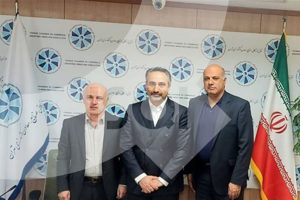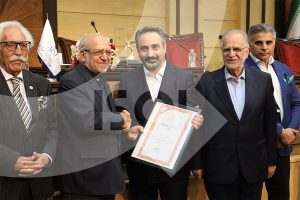


- The iran crash test center of the Automotive Safety and Quality Testing Company (AQS), now in its final stages, recently hosted high-ranking officials including the Minister of Industry, Mine and Trade and the head of the Traffic Police of the Law Enforcement Force. Using modern equipment and based on Euro NCAP standards, this center has reached a new stage in evaluating the safety of domestic vehicles. Below, we examine the details of this major development in the automotive industry.
AQS capabilities on the international stage Ali Pakdaman, Deputy for Economic Affairs and Support at the Automotive Safety and Quality Testing Center (AQS), announced that the center is capable of performing most international tests, including standards R94, R95, R32, R34, R12 and R137. These capabilities, together with the use of advanced equipment certified by Euro NCAP, make it possible to carry out beyond-regulation tests in accordance with NCAP standards and help advance Iran’s entry into advanced global standards.
The importance of crash tests Emphasizing the importance of crash tests designed and conducted to protect occupants’ lives, Pakdaman listed some of these tests as follows: • Full front impact • Low and medium overlap frontal impact • Side impact • Pole impact • Rear impact • Rollover tests He also noted that AQS is only a crash test laboratory and, although it does not have the executive power to prevent or restrict vehicle production, it can contribute to properly understanding vehicle behavior in crashes and provide valuable assistance to regulatory and supervisory bodies as well as manufacturers. Pakdaman pointed out that the recently released videos relate only to testing the center’s equipment and not to actual vehicle crash tests.
Advanced Equipment and Infrastructure
Amir Mehdi Shojaeifard, head of the dummy lab at the Iran Crash Test Center, pointed out the diversity and quality of the center’s equipment and named several main sections:
- Test line with a length of 235 meters and a tolerance of one millimeter • Completely rigid impact block with manufacturing and installation tolerance of less than 0.5 mm in 4 meters • Powerful propulsion system capable of towing vehicles up to 3500 kg and speeds up to 110 km/h • Advanced calibration and performance control laboratory for dummies manufactured by ACTS Germany • Utilization of various standard barriers in accordance with regulations R32/34, R95 and Euro-NCAP (AEMDB) manufactured by ERNST Germany
This equipment brings the accuracy of the tests closer to global standards.
Precise Imaging and Measurement Capabilities
Shojaeifard also mentioned the center’s imaging systems for their ability to record critical moments of impact with high accuracy. Some of these features include:
- NAC ultra-high-speed imaging system from Japan with the ability to record images from 1,000 to 100,000 frames per second • VISOL professional lighting suitable for the required features in ultra-high-speed imaging • Advanced dummies manufactured by JASTI Japan equipped with ENDEVCO US sensors and MG-Sensor Germany
These systems enable accurate analysis of the moment of impact and recording of accurate actual axial data.
Collaboration with the Automotive Industry and Research Infrastructure
The Iran Crash Test Center has four specialized workshops that provide services such as sensor installation, testing of electric and hybrid vehicles, and development of joint projects with automakers. These infrastructures have made AQS one of the most complete testing and development centers in the region.
Training Professionals to International Standards
Shojaeifard announced that groups of specialists from the center were sent to one of the most reputable and largest car testing centers in Asia last year to complete specialized courses. The transfer of this up-to-date knowledge will significantly improve the country’s engineering capabilities.
The Future of Domestic Vehicle Safety
The head of the dummy lab at the crash test center emphasized that with the official commencement of mandatory and research tests in the country, the path to increasing the safety level of domestically produced vehicles to international standards will become smooth and achievable, and we hope that the results of these advancements will soon be visible in the products.
Reduction of Crash Test Costs
With the launch of the Automotive Safety and Quality Test Center (AQS), the cost of crash testing domestic vehicles, which previously averaged around 20 to 30 thousand euros in Spain, Russia, China, etc., will decrease by 25 percent.
AQS managers announced that the official opening of this center will take place soon with the presence of the President, and what has been done so far in this center has only been equipment testing during the presence of government officials.
Given the investment of shareholders and the opening of the AQS center, we will witness fundamental changes in the country’s automotive industry. By utilizing advanced European technologies and close relationships with automakers, this center has the potential to rapidly develop safety technologies and align with global standards. It is hoped that Iran will soon join the ranks of developed countries in the field of vehicle safety, providing a future of better safety for drivers and a safer future for all the people of the country.