
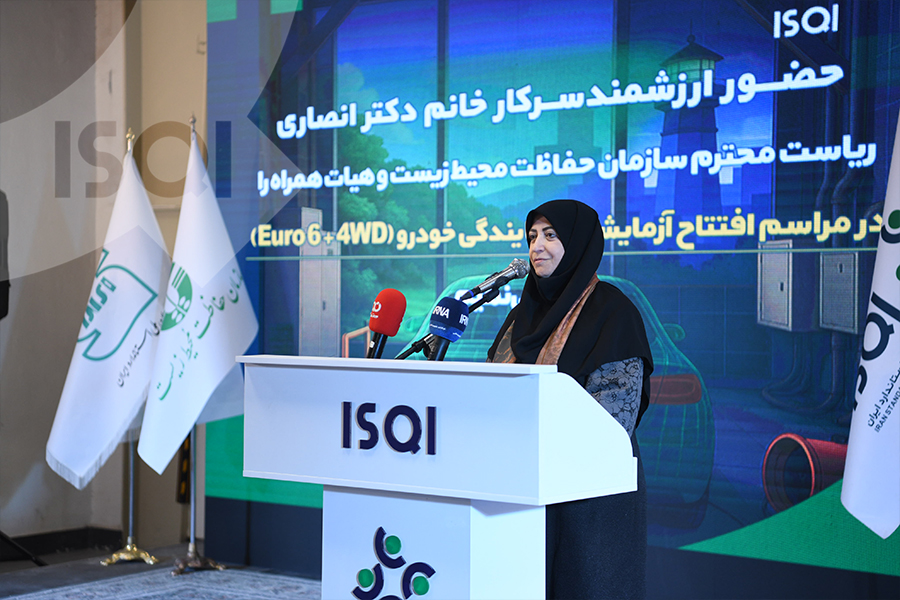
At the inauguration ceremony of the Euro 6 vehicle emissions laboratory hosted by the Iran Standards and Quality Inspection Company, Sheena Ansari, the head of the Department of Environment, referred to the implementation of the Clean Air Act under the fourteenth government and spoke about the measures taken in the field of air pollution management and control in automotive inspection.
Emphasizing the crucial role of vehicles and mobile sources in the air pollution of major cities—especially Tehran—she stated that about 80% of polluting gases in the capital originate from motor vehicles. Ansari added that, based on Article 4 of the Clean Air Act, the production and import of vehicles must comply with permissible emission limits and the standards approved by the Department of Environment and the National Standards Organization.
Referring to the Cabinet’s resolution requiring automobile manufacturers to produce vehicles meeting Euro 6 standards from 2027 (year 1406) onward, the head of the Department of Environment highlighted that establishing testing infrastructure and improving production quality must be prioritized by automakers starting now.
Ansari further noted that, according to vehicle inspection data, a significant portion of cars exempt from mandatory inspections fail due to emissions issues. She suggested that enhancing oversight during vehicle production and establishing emissions centers capable of testing vehicles to Euro 6 standards are among the most essential prerequisites. She stressed that achieving this goal will require significant action and capacity building by automakers.
She also emphasized the importance of catalytic converters in controlling air pollutant emissions and underscored that enforcing national standards for these components must be placed on the agenda of the National Standards Organization. This measure, she noted, can have a substantial impact on reducing pollutant emissions in automotive inspection.
Ansari stated that effective and logical management of air pollution requires actions such as improving fuel quality and scrapping old, high-emission vehicles. She stressed the need for interagency cooperation between government bodies and the private sector. She also wished success to all those working toward improving healthy air quality and environmental protection, especially the Iran Standards and Quality Inspection Company.
In conclusion, she emphasized the importance of continuous monitoring of vehicle quality and production, improving fuel standards, and upgrading the necessary regulations—considering these measures key steps toward achieving clean air.