
A newly developed tool addresses the global shortage of qualified nondestructive testing (NDT) inspectors, a challenge affecting manufacturers and maintenance operations worldwide. This shortage stems from an aging workforce, limited awareness of NDT career paths among younger professionals, the specialized skills required, and rising demand for expertise across industries. The result is overworked inspection personnel, increasing the risk of human error, causing delays in production and maintenance schedules, and driving up operational costs.
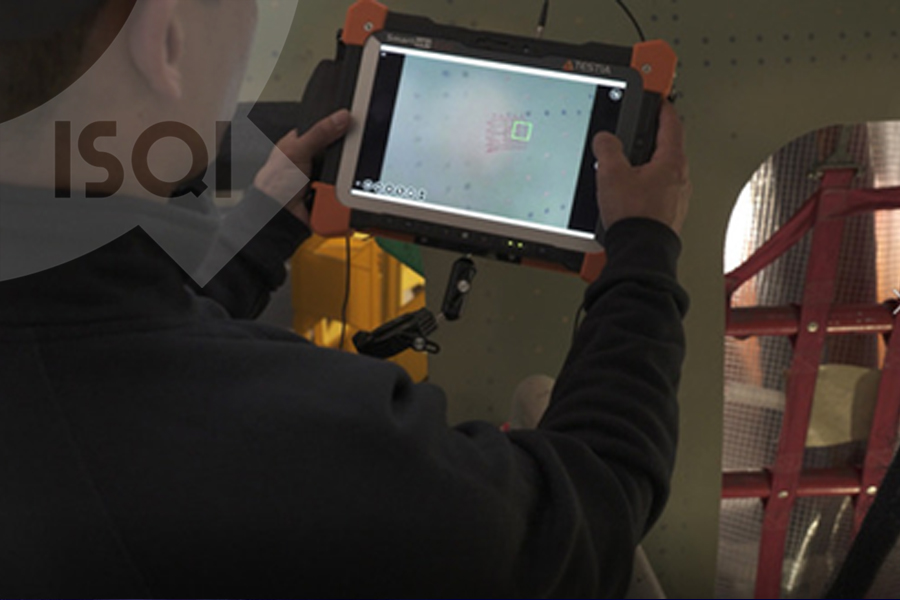
To help address these challenges, Testia, a company based in France, created a portable NDT instrument called the Smart UE1, which integrates three inspection technologies—ultrasonic testing, eddy current testing, and resonance testing—into a single device. This combination enables comprehensive structural assessments without the need for multiple specialized instruments. The Smart UE1 is referenced in over 185 procedures in Airbus’ Non-destructive Testing Manual for aircraft maintenance, highlighting its reliability and widespread acceptance in critical inspection environments.
The Smart UE1 operates on a Windows platform and supports standard system connections, ensuring compatibility with various inspection workflows. It provides multiple dedicated applications for different inspection needs. In basic mode, less-experienced, non-certified operators can perform direct-reading tasks such as digital thickness measurement and detection of material cladding, allowing certified inspectors to focus on complex analysis. Expert mode enables certified NDT personnel to conduct advanced evaluations, including flaw detection using ultrasonic and eddy current methods, detailed thickness scans, and resonance testing.
Design considerations prioritize usability in challenging environments, particularly in aerospace manufacturing and maintenance. The device features ruggedized construction, a large touch screen operable with gloves, and integrated cameras for documenting inspections and supporting remote communication. Ergonomic design and connectivity options, including Bluetooth, Wi-Fi, and HDMI, enhance workflow efficiency and reduce logistical burdens. Optional screen mirroring allows inspections to be remotely monitored or controlled, minimizing operational risks in confined or hard-to-access areas.
By consolidating multiple NDT methods into a single instrument and enabling parts of the inspection process to be performed by less-specialized operators, the Smart UE1 reduces personnel bottlenecks, accelerates inspections, and eases the burden on limited certified resources. Its applications cover the full lifecycle of aircraft components—from research and development to manufacturing, scheduled maintenance, and unplanned repairs—making it a versatile solution for ensuring quality assurance and structural integrity.
Source: E-Journal of Nondestructive Testing (https://www.ndt.net/?id=32549). TESTIA France (2026).