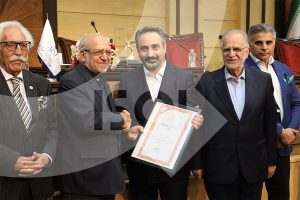


With the presence of the heads of the Environment Protection Organization and the Standards Organization, a Euro 6 laboratory for car inspection was inaugurated at the Iran Inspection Company for Quality and Standards (ISQI).
On 2 November 2025, the opening ceremony of the passenger vehicle emissions measurement laboratory based on the latest international Euro 6 standard and for two-axle vehicles was held with the attendance of the government spokesperson, the head of the Environment Protection Organization, the head of the National Standards Organization of Iran, the CEO of the Organization for Development and Renovation of Iranian Industries, and the governor of Alborz Province. The ceremony took place at the laboratory complex of the Iran Inspection Company for Quality and Standards, which is recognized as the country’s sole independent reference laboratory for mobile-source emissions.
The Euro 6 laboratory was established to meet the current needs of the automotive industry and car inspection, in line with the global tightening of emissions standards and a cabinet resolution, and in response to the rise in particulate pollutants PM2.5 and PM10—particularly in the country’s major cities—so that the necessary infrastructure for implementing this standard domestically is provided and automakers move toward improved design and reduced vehicle emissions.
It should be noted that this project was completed with full private-sector investment and the support of the Environment Protection Organization, the National Standards Organization, the Ministry of Industry, Mine and Trade, and the Vice-Presidency for Science and Technology, and it is hoped that making the Euro 6 standard mandatory will help reduce air pollutants from mobile sources.
The ceremony was attended by a number of government officials, representatives of automakers, related professional associations and organizations, and private-sector stakeholders, and is considered a small step toward sustainable development and the enhancement of the country’s environmental standards.