

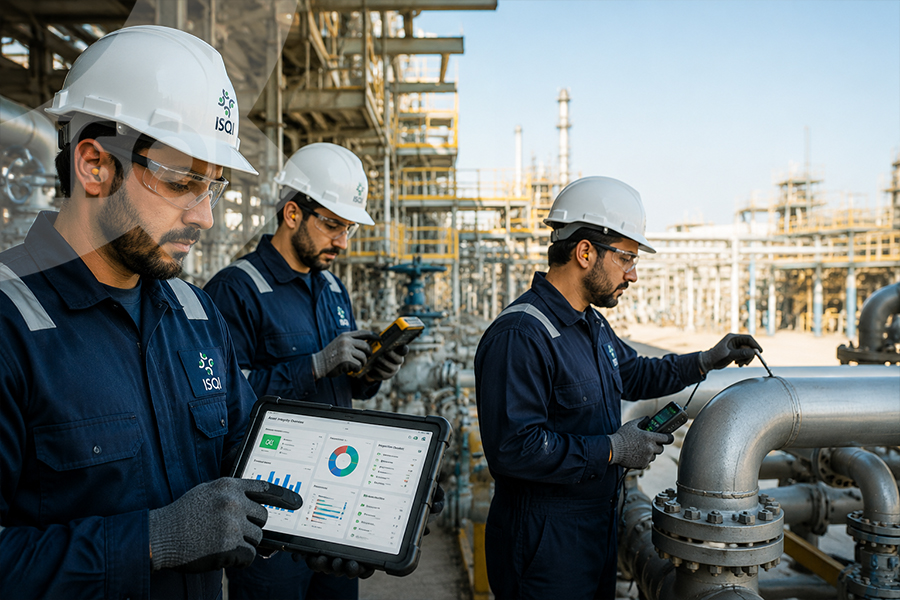
In recent years, the oil and gas refining industry has undergone a significant transformation: a shift from traditional inspection methods based on field visits toward digital and data-driven inspections. In refinery revamp projects, the large volume of technical information, the complexity of activities, and strict time constraints have made traditional methods insufficient to meet modern requirements.
In this context, the digitalization of inspection services has emerged as a modern approach that plays a key role in enhancing the accuracy, speed, and traceability of engineering decisions.
Transformation from Traditional Inspection to Digital Inspection
In the past, inspection processes were mainly based on paper reports, manual checklists, and scattered records. While these methods were widely used, they were time-consuming and increased the likelihood of human error and data loss.
In contrast, digital inspection utilizes tools such as data management systems, mobile inspection applications, online dashboards, and centralized databases. This transformation enables real-time recording, analysis, and accessibility of project information for decision-makers.
The Role of Data in Improving Engineering Decision-Making
One of the most important advantages of digitalization is the transformation of raw inspection data into actionable insights. Data related to thickness measurements, non-destructive testing (NDT) results, welding reports, and construction progress is collected within an integrated system, enabling trend analysis.
These analyses help engineers to:
* Identify critical areas of the project
* Predict failure or deviation trends
* Make corrective decisions more quickly
* Control technical risks before incidents occur
Integration of Inspection Services with Asset Management Systems (AIMS)
One of the most advanced approaches in refinery revamp projects is the integration of inspection services with an Asset Integrity Management System (AIMS).
In this structure, inspection data is directly fed into the asset management system and analyzed alongside operational, maintenance, and design data. This integration enables decision-making based on a more comprehensive view of equipment condition.
Applications of Modern Technologies in Digital Inspection:
Various technologies play a key role in the digitalization of inspection services, including:
* Mobile Inspection Apps: Fast on-site recording of inspection results
* Digital Twin Modeling: Simulation of real equipment conditions in a virtual environment
* Smart Dashboards: Real-time visualization of project progress and quality
* Cloud Data Platforms: Secure storage and access to project data
* Artificial Intelligence: Analysis of inspection data for failure prediction
Benefits of Digitalization in Revamp Projects
The use of digital systems in refinery revamp inspection projects offers numerous advantages, including:
* Increased speed of data recording and processing
* Reduced human error in reporting
* Improved transparency between client and contractor
* Enhanced traceability of activities
* Easier audits and project handover processes
Challenges of Implementing Digital Inspection
Despite its benefits, implementing digital inspection systems is not without challenges. Resistance to change, the need for workforce training, initial implementation costs, and integration with legacy systems are among the main barriers.
However, experience from large-scale projects has shown that the long-term benefits of these systems significantly outweigh the initial costs.
Conclusion
Digitalization of inspection services in refinery revamp projects is an inevitable transformation in the oil and gas industry. By converting inspection data into engineering decision-making tools, this approach not only improves project quality but also plays a significant role in reducing risk, cost, and execution time.
In the future, the most successful revamp projects will be those that transform inspection from a traditional field activity into an intelligent, data-driven, and fully integrated system.
Author: Zahra Shirband – International Relations Expert ISQI
Sources:
- ISO 55000: *Asset Management – Overview, Principles and Terminology*, International Organization for Standardization (ISO).
- API RP 581: *Risk-Based Inspection Technology*, American Petroleum Institute (API).
- API RP 580: *Risk-Based Inspection (RBI)*, American Petroleum Institute (API).
- ISO 14224: *Petroleum, petrochemical and natural gas industries — Collection and exchange of reliability and maintenance data for equipment*, International Organization for Standardization (ISO).
- McKinsey & Company. *Digital Transformation in Oil and Gas: How data and analytics are reshaping operations*, Industry Report.