
Relying on traditional manual and visual inspection methods in post-crisis environments is not only time-consuming but also poses significant risks to the safety of inspectors due to inaccessible heights or hazardous conditions. The integration of modern technologies has shifted the inspection paradigm from “reactive” to “proactive and precise.”
Part 1: Keen Eyes in the Sky and Blind Spots
- Survey Drones and LiDAR-Equipped UAVs
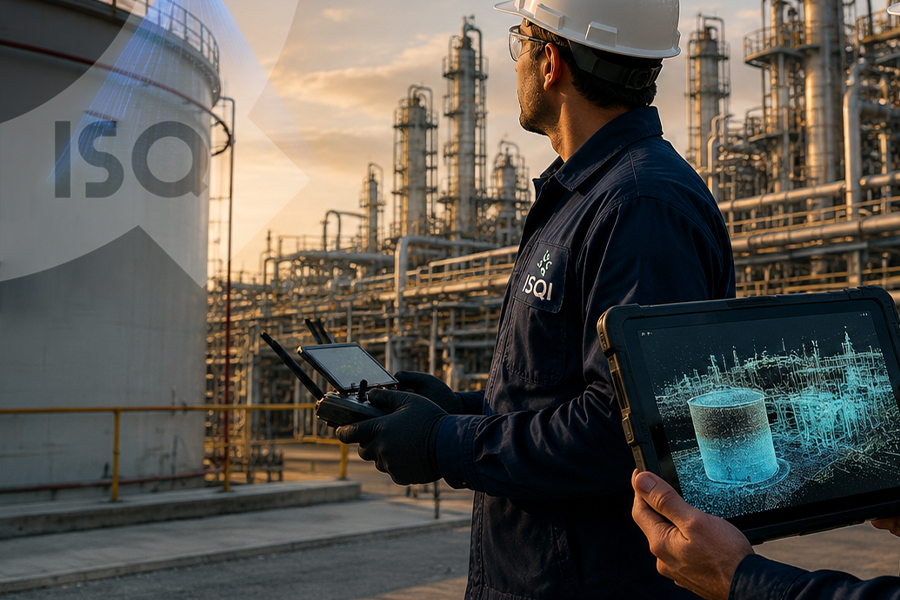
Unmanned Aerial Vehicles (UAVs) have become the gold standard for inspecting high-rise structures, warehouse roofs, and hard-to-reach areas.
LiDAR (Laser Scanning): Drones equipped with LiDAR can generate highly accurate 3D models (Digital Twins) of a structure’s current state. By comparing these models with original “As-Built” drawings, even the slightest deformation, settlement, or column tilt can be detected within hours.
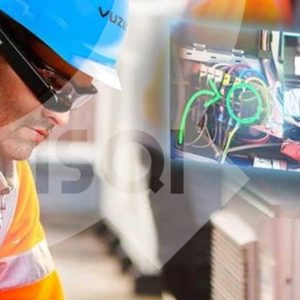
Thermal Imaging: Integrating thermal cameras onto drones allows for the rapid identification of electrical installations or equipment suffering from short circuits or abnormal heat generation following a crisis.
- Robotic Arms and Crawlers
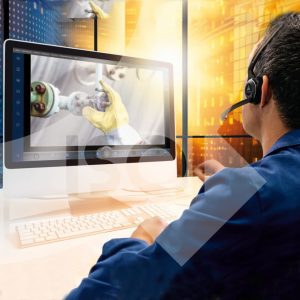
In confined spaces, tanks, or industrial pipelines that may remain unstable after an incident, robots equipped with high-resolution (4K) cameras can conduct internal inspections without the need for human entry.
Part 2: Artificial Intelligence and Big Data Analytics
- Image Processing and Automated Defect Detection
Artificial Intelligence (AI) is the heartbeat of modern inspection. Computer Vision algorithms can analyze thousands of images captured by drones, marking cracks, corrosion, or surface oxidation with extreme precision.
Speed: Tasks that would take human inspectors days are completed by AI in mere minutes.
Accuracy: AI does not suffer from fatigue and can easily identify subtle anomalies in images that might escape the human eye.
- Structural Health Monitoring (SHM) with IoT Sensors
Installing intelligent vibration and strain sensors on critical structures enables “online monitoring.” Following a crisis, these sensors instantly transmit vibration or stress data to a central system, allowing engineers to determine whether the structure remains within safe operational limits.
Part 3: Digital Twins; Simulators for Production Resumption
- 3D Scanning and Digital Modeling for Damage Assessment
In advanced inspections, the use of 3D laser scanners and photogrammetry allows engineers to obtain a precise model of the actual state of structures and equipment. These models are cross-referenced with design data to identify any geometric deviations. These technologies offer critical advantages:
– Increased precision in detecting deformations.
– Comprehensive documentation prior to repair.
– Capability to monitor changes over time.
– Reduced reliance on subjective visual inspection.
– Establishing a database for the Digital Twin.
- Digital Twin
Perhaps the greatest technological achievement in crisis management is the creation of a “Digital Twin.” By inputting data gathered from drones and sensors into software models, a precise simulator of the factory is created. This allows managers to test various production load scenarios in a virtual environment before actually restarting the machinery, ensuring the repaired structures or equipment can handle the operational stress.
Conclusion
Modern technologies have transformed post-crisis inspection from a speculative and hazardous process into a precise science. While investing in equipment like drones and AI-based software entails high initial costs, the long-term benefits—preventing human error and minimizing downtime—result in a return on investment that far outweighs the initial expense. The future of industry lies in data-driven inspections.
Author: Zahra Shirband – International Relations Expert ISQI
Sources:
- Journal of Structural Health Monitoring: Recent Advances in UAV-based Inspection of Industrial Structures.
- IEEE Xplore: Application of Artificial Intelligence and Computer Vision in Post-Disaster Damage Assessment.
- Digital Twin Institute: Using Digital Twins for Business Continuity and Industrial Recovery.
- CIPA (International Committee for Documentation of Cultural Heritage): Guidelines for 3D Laser Scanning and Data Management in Harsh Environments.
- Engineering News-Record (ENR): The Shift to Automated Inspection and Robotics in Industrial Facilities.