

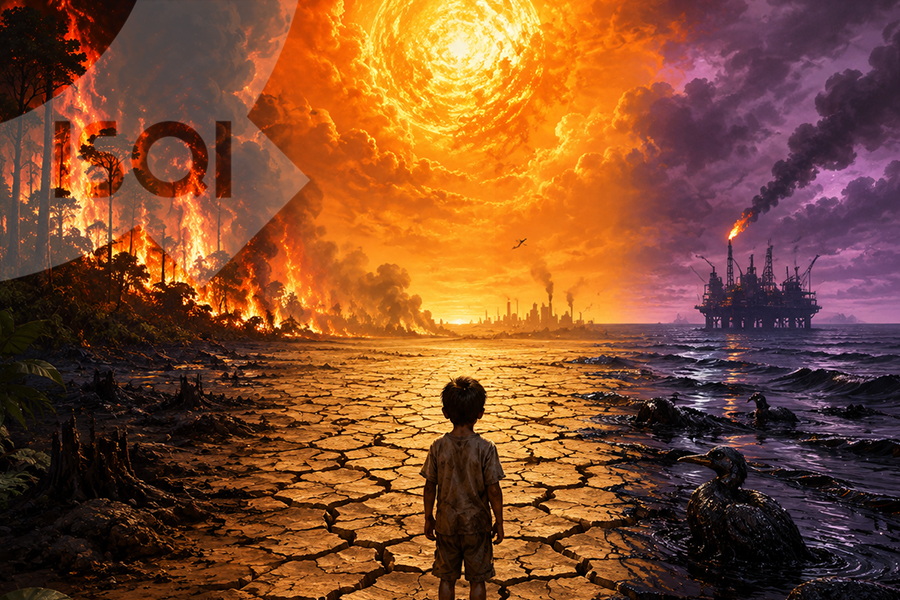
What Is Ecocide and Why Does It Matter?
In recent decades, the concept of “ecocide” has emerged as one of the most significant ideas in international environmental law. The term refers to the widespread, severe, or long-term destruction of the environment—damage that can devastate natural ecosystems and seriously threaten the lives of humans and other species. Many scholars and environmental activists argue that ecocide should be recognized as an international crime, alongside genocide and crimes against humanity.
A look at modern history reveals numerous environmental catastrophes whose impacts have lasted not only for years but for generations. Some of these disasters were caused by war, others by industrial negligence, and some by unsustainable exploitation of natural resources. Below are 10 of the largest environmental disasters in the world that many experts consider examples of ecocide.
- The Vietnam War and the Use of Agent Orange
During the Vietnam War, the United States military sprayed millions of liters of chemical defoliants known as Agent Orange over large areas of Vietnam, Laos, and Cambodia to destroy forest cover and crops. The substance contained highly toxic dioxins.
The result was widespread destruction of tropical forests, contamination of soil and water resources, and severe health impacts on humans. Millions of people in Vietnam were exposed to these chemicals, and their effects—including birth defects and chronic illnesses—are still visible in subsequent generations. Many consider this one of the clearest examples of ecocide in wartime history.
- The Chernobyl Nuclear Disaster
In 1986, an explosion at the Chernobyl nuclear power plant in Ukraine released massive amounts of radioactive material into the environment. The incident quickly became one of the world’s worst environmental and industrial disasters.
Large areas of Ukraine, Belarus, and even parts of Europe were contaminated. Thousands of square kilometers of farmland and forest were affected, and a vast exclusion zone was permanently evacuated. The long-term health effects, including increased rates of thyroid cancer, are still being studied today.
- The Exxon Valdez Oil Spill
In 1989, the oil tanker Exxon Valdez struck a reef in Alaska, releasing approximately 40,000 tons of crude oil into the sea. The disaster became one of the most notorious oil spills in history.
The spill killed hundreds of thousands of seabirds, thousands of sea otters, and numerous fish and marine mammals. Alaska’s coastal ecosystems were severely damaged, and some habitats have yet to fully recover. The incident drew global attention to the risks associated with oil transportation.
- Widespread Fires in the Amazon Rainforest
The Amazon rainforest—the largest tropical rainforest in the world—has faced extensive deforestation and deliberate fires in recent decades. Many of these fires are set to clear land for cattle ranching and agriculture.
The destruction of vast areas of forest has eliminated habitats for thousands of plant and animal species and contributed significantly to greenhouse gas emissions. Given the Amazon’s crucial role in regulating the global climate, its destruction poses a serious threat to the planet’s ecological balance.
- The Gulf of Mexico Oil Spill (Deepwater Horizon)
In 2010, an explosion on the Deepwater Horizon offshore drilling rig in the Gulf of Mexico caused one of the largest oil spills in history. Over several months, millions of barrels of oil were released into the ocean.
The disaster caused extensive damage to marine ecosystems, destroyed coastal habitats, and severely reduced populations of certain marine species. In addition to environmental harm, local economies dependent on fishing and tourism were deeply affected.
- Deforestation in Indonesia for Palm Oil Production
Indonesia has become one of the world’s primary centers of deforestation. Large portions of its rainforests have been cleared to establish palm oil plantations.
This process has destroyed habitats of species such as orangutans, Sumatran tigers, and Asian elephants, while also releasing vast amounts of greenhouse gases. The burning of forests to prepare land has caused severe air pollution across Southeast Asia, affecting the health of millions of people.
- The Drying of the Aral Sea
Once one of the largest lakes in the world, the Aral Sea in Central Asia shrank dramatically in the late 20th century due to large-scale river diversion projects for agriculture.
The drastic reduction in water levels led to the collapse of the regional fishing industry and the emergence of dangerous salt storms. Salt and chemical residues from the exposed lakebed are carried by wind to surrounding areas, causing serious health and agricultural problems.
- The Bhopal Industrial Disaster
In 1984, a toxic gas leak from a pesticide plant in Bhopal, India, killed thousands of people immediately and exposed hundreds of thousands more to hazardous chemicals. It remains one of the deadliest industrial disasters in history.
Chemical contamination persisted for years in soil and groundwater, continuing to threaten the health of local residents. Many experts regard this disaster as a stark example of the consequences of neglecting environmental safety standards.
- Oil Pollution in the Niger Delta
The Niger Delta in Nigeria is one of Africa’s richest oil-producing regions, yet decades of extraction and repeated oil spills have caused widespread environmental devastation.
Wetlands, rivers, and farmland have been extensively contaminated, and many local communities have lost their livelihoods. This situation is often described as an example of gradual and chronic ecocide.
- Climate Change and the Melting of Polar Ice
Human-induced global warming has accelerated the melting of polar ice caps. This process has far-reaching consequences for polar ecosystems and global sea levels.
The loss of habitat for species such as polar bears, rising sea levels, and shifting climate patterns are among the major impacts. Some researchers argue that the deliberate neglect of the climate crisis could, in the future, be regarded as a form of global ecocide.
Conclusion
These examples demonstrate that large-scale environmental destruction is often the result of human decisions, economic policies, or disregard for long-term consequences. Environmental disasters not only devastate nature but also threaten human health, food security, and economic stability.
For this reason, many experts emphasize the need to strengthen international environmental laws and increase accountability for governments and corporations. Preventing such catastrophes requires fundamental changes in natural resource management, sustainable development practices, and a stronger global commitment to environmental protection.
Author: Zahra Shirband – International Relations Expert
Sources:
- Higgins, Polly. Eradicating Ecocide: Laws and Governance to Prevent the Destruction of Our Planet. Shepheard-Walwyn, 2010.
- United Nations Environment Programme (UNEP). Reports on global environmental disasters and ecosystem degradation.
- Intergovernmental Panel on Climate Change (IPCC). Assessment Reports on Climate Change.
- World Health Organization (WHO). Reports on the Chernobyl disaster and its health impacts.
- National Oceanic and Atmospheric Administration (NOAA). Documentation on the Exxon Valdez oil spill.
- U.S. Environmental Protection Agency (EPA). Reports on Agent Orange and environmental contamination during the Vietnam War.
- National Geographic Society. Articles on Amazon deforestation and global environmental crises.
- Greenpeace International. Reports on deforestation in Indonesia and environmental impacts of palm oil production.
- BP Deepwater Horizon Oil Spill Commission Report (2011).
- Encyclopaedia Britannica. Entries on major environmental disasters including Chernobyl, Bhopal, and the Aral Sea crisis.