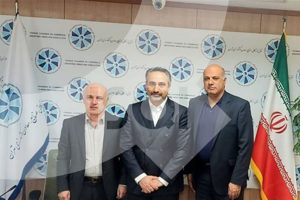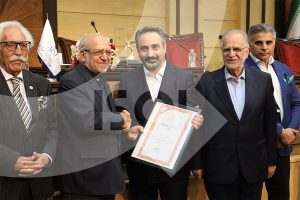

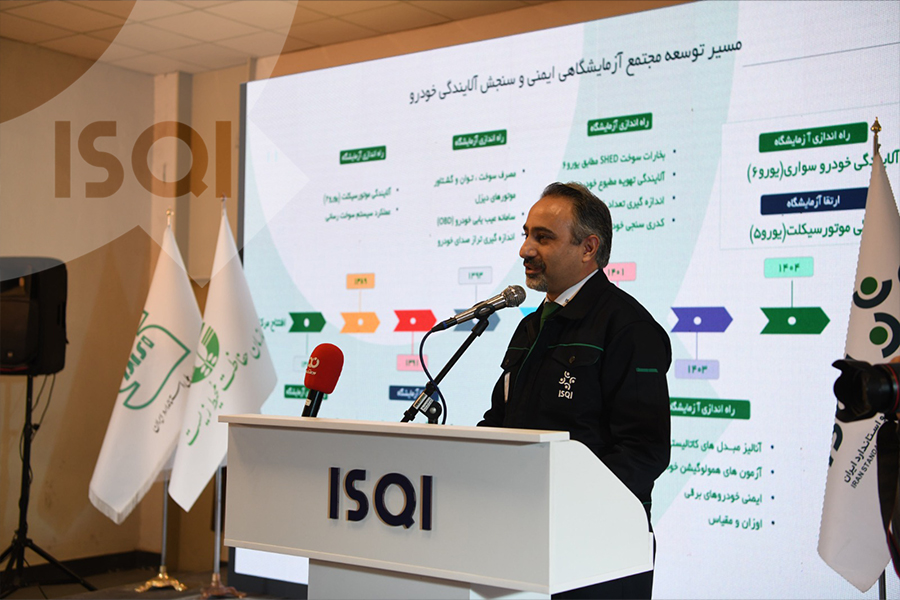
In a ceremony attended by the head of the Iran National Standards Organization, the head of the Industrial Development and Renovation Organization, and several government and automotive industry officials, Iran’s new Diesel and Electric Vehicle Laboratory—known as the Euro 6 Laboratory—was officially inaugurated. This facility marks a significant milestone in car inspection and aims to enhance safety, quality, and emission control in Iran’s automotive industry.
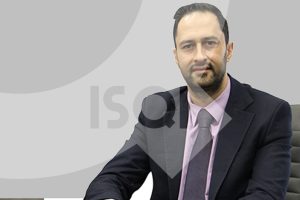
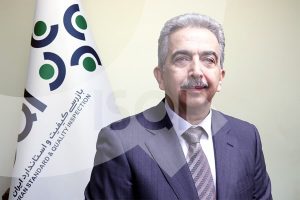
Dr. Saeed Tajik, CEO of the Iran Standards and Quality Inspection Company (ISQI), welcomed guests and introduced the company’s activities and achievements. He stated:
“The Iran Standards and Quality Inspection Company (ISQI), founded in 1989, now employs over 1,626 people with an average age of 32, operating as a young, knowledge-based organization in the field of standards and quality services.”
He added:
“Our mission is to improve safety, quality, and peace in people’s lives. Every effort we make is dedicated to serving society and the country’s industry.”
Dr. Tajik highlighted the company’s recent achievements:
“In the past year, our company was recognized as the National Exemplary Exporter, honored as the Top Service Company in Iran at the National Quality Festival, and selected as the Provincial Exemplary Industrial Unit. These accomplishments reflect the continuous efforts of our colleagues and the company’s focus on expanding services and improving standards.”
He continued:
“This new laboratory, established with an investment of nearly €3 million and supported by the Vice-Presidency for Science and Technology, is Iran’s first specialized vehicle safety testing facility. Previously, many Euro-standard tests – especially for electric and diesel vehicles – had to be conducted abroad at great cost. Now, all such tests can be performed domestically, ensuring compliance with regulations while enabling advanced research and testing for automakers.”
Dr. Tajik reviewed the history of car inspection and laboratory development, noting:
“Our automotive lab began operating in 2005 and has gradually expanded about car inspection to include tests for fuel consumption, diesel engine power, fuel vapor emissions, air conditioning performance, and pollution standards – progressing from Euro 5 to now Euro 6.”
He also addressed the issue of old vehicles and their environmental and economic impact:
“Iran currently has around 7.5 million worn-out vehicles, which consume far more fuel than new ones. Given an annual mileage of about 20,000 km per vehicle, these cars waste over $7.5 billion worth of extra fuel each year – the equivalent of 15,000 megawatts of solar power generation capacity.”
Dr. Tajik emphasized the importance of continuous monitoring of vehicles in operation and adherence to emission standards:
“Catalytic converters and standard fuel play a vital role in reducing emissions. Continuous supervision of inspection centers and vehicles in use is essential.”
He concluded:
“The inauguration of this laboratory is not just an industrial achievement but an important step toward environmental protection and improving quality of life. As the National Standards Organization and ISQI, we are committed to narrowing the gap between domestic and international standards and this journey continues.”
The new laboratory can test both dual-axle and electric vehicles and is equipped to conduct both mandatory and research-level Euro 6 tests. With this facility, for the first time in Iran’s automotive history, all vehicle safety and emission tests will be carried out domestically.
Dr. Tajik closed his remarks with an inspiring message:
“Our future is in our own hands. We are the makers of Iran, not its spectators. Wherever we stand, we must play our true part in the nation’s progress. This is our legacy and purpose to work tirelessly not only to raise industry standards and quality but also to improve our environment, people’s lives, and the country’s future.”