
Introduction
Offshore drilling rigs are among the most complex and capital-intensive assets in the oil and gas industry. A significant portion of their critical infrastructure is located below the water surface, where human access is difficult, expensive, and often associated with substantial safety risks. Consequently, routine inspection of submerged structures has long been one of the major operational challenges for offshore operators.
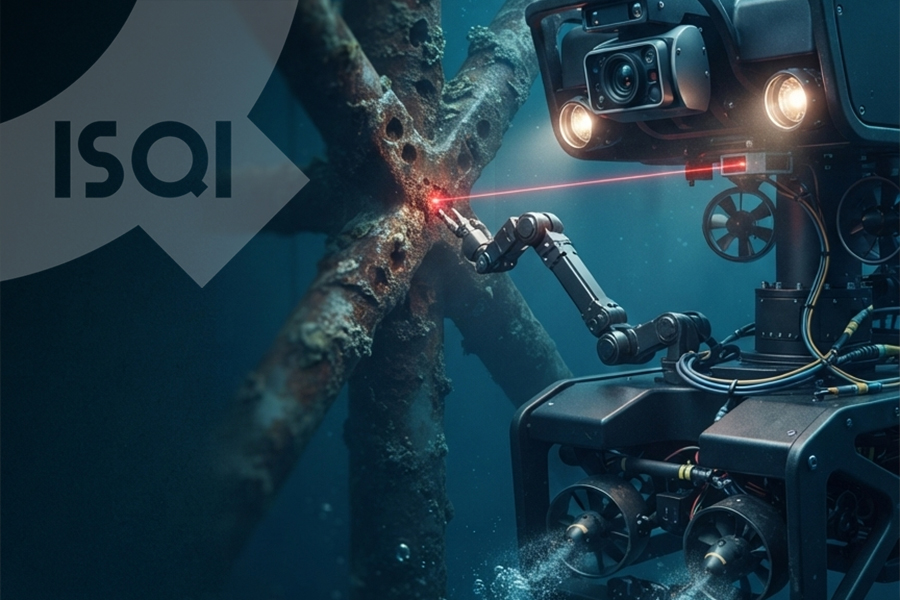
Recent advances in Unmanned Underwater Vehicles (UUVs) have transformed the way underwater inspections are performed. These robotic systems enable engineers to inspect offshore structures, subsea pipelines, rig foundations, and submerged equipment without relying on commercial divers. Beyond improving personnel safety, UUVs significantly enhance inspection accuracy, efficiency, and data quality.
Why Are Underwater Inspections Critical?
The offshore environment continuously exposes submerged equipment to corrosion, erosion, ocean currents, and mechanical stresses. If these forms of degradation are not detected early, they can lead to oil leaks, structural failures, production downtime, and severe environmental incidents.
Experience from major offshore accidents has demonstrated that many technical failures initially appear as minor defects. Detecting these issues during their early stages can prevent costly repairs and catastrophic failures. Therefore, periodic underwater inspection is an essential component of integrated asset integrity management for offshore facilities.
How Do UUVs Perform Offshore Inspections?
Modern underwater robots are equipped with high-resolution cameras, multiple sensors, lighting systems, and measurement instruments. These technologies allow them to capture detailed images of subsea structures, identify potential leaks or damage, and provide engineers with valuable data for condition assessment.
Vehicle movement is controlled by a series of thrusters, which generate propulsion in multiple directions while maintaining stability and precise positioning. Thruster performance is fundamental to inspection quality, as even minor instability can reduce image clarity and measurement accuracy.
The referenced study focuses specifically on evaluating the performance of horizontal and vertical thrusters through numerical modeling to improve the maneuverability and operational stability of inspection UUVs.
Why Does Vehicle Design Matter?
Contrary to common perception, successful underwater inspection depends on far more than simply mounting cameras and sensors on a robotic platform.
Hull geometry, equipment layout, number and placement of thrusters, buoyancy modules, vehicle weight, dimensions, and operational depth all influence stability and maneuverability.
Research shows that hydrodynamic forces, buoyancy, gravity, water resistance, and propulsion must be considered simultaneously during the design process to ensure reliable vehicle performance in ocean currents. To evaluate these factors, engineers developed a three-dimensional model of the UUV and simulated its behavior under different operating conditions.
The study also found that ducted (nozzle-equipped) thrusters produce more effective thrust while reducing stress on propeller blades compared with open propeller designs. Furthermore, improving vertical maneuverability at greater depths is more effectively achieved by increasing the number of vertical thrusters rather than adding additional horizontal ones.
These findings demonstrate that an optimized propulsion system not only enhances vehicle stability but also improves image quality, measurement precision, and overall inspection reliability.
The Role of Engineering Simulation
One of the most significant aspects of this research is the application of advanced engineering simulation techniques, including Computational Fluid Dynamics (CFD) and Finite Element Method (FEM) analysis.
CFD simulations were used to evaluate water flow around the thrusters, pressure distribution, and flow velocity. This enables engineers to predict the thrust generated by each propulsion unit before manufacturing.
Meanwhile, FEM analysis was employed to assess stress distribution and deformation of the propeller blades, ensuring that structural components can withstand operational loads without mechanical failure.
By combining these simulation methods, designers can optimize vehicle performance before physical prototyping, significantly reducing development costs, testing time, and engineering risks.
Advantages of Using UUVs for Offshore Rig Inspection
The implementation of UUV technology offers numerous benefits to offshore oil and gas operations, including:
- Reduced reliance on commercial divers and improved personnel safety;
- Inspection capabilities in deep water and harsh offshore environments;
- Reduced equipment downtime during inspection campaigns;
- Improved detection of corrosion, cracks, leaks, and structural defects;
- Collection of high-quality visual documentation and engineering data;
- Lower maintenance costs through early defect detection;
- Enhanced implementation of Condition-Based Maintenance (CBM) strategies.
Conclusion
Unmanned Underwater Vehicles are rapidly becoming indispensable tools for offshore asset integrity management. By reducing human exposure to hazardous environments while enabling continuous monitoring and high-precision inspections, these systems significantly improve both operational safety and maintenance efficiency.
At the same time, engineering simulation techniques such as CFD and FEM enable designers to evaluate and optimize UUV performance before physical construction. The result is the development of more reliable, efficient, and cost-effective inspection systems capable of meeting the growing demands of modern offshore operations.
As offshore oil and gas developments continue to expand into deeper and more challenging environments, the role of intelligent underwater robotic inspection systems will become increasingly critical.
Author: Zahra Shirband – International Relations Expert ISQI
Source: Modeling of Unmanned Underwater Vehicle with Rotating Thrusters for Offshore Rig Inspection
DOI: 10.1109/UVS.2019.8658311