
Non-Destructive Testing (NDT) professionals have long played a critical role in ensuring safety across industries, protecting people, assets, and the environment by detecting defects before they escalate. Traditionally, inspections relied heavily on hands-on expertise, technical knowledge, and rigorous certification processes. Today, the NDT landscape is evolving rapidly, driven by technologies such as Artificial Intelligence (AI), robotics, automation, and digital inspection platforms.
As industrial assets grow increasingly complex in sectors such as energy, aviation, and infrastructure, inspection requirements are becoming more stringent. Companies demand faster, more accurate, digitally traceable, and auditable inspections. Traditional NDT skills alone are no longer sufficient; modern professionals must integrate conventional expertise with digital capabilities, becoming versatile problem-solvers in an era of NDT 4.0, the next generation of non-destructive testing that combines traditional inspection methods with smart technologies, automation, AI, and digital workflows to enhance reliability, efficiency, and predictive capabilities.
The NDT professional of the future builds on strong foundations in traditional methods—ultrasonic, magnetic particle, penetrant, radiographic, and visual testing—while mastering digital intelligence, predictive analytics, and automated systems. This transformation requires not only new tools but also a mindset shift. Continuous learning, adaptability, and cross-disciplinary competence are essential, as no single certification or narrow skill set can address today’s complex inspection demands.
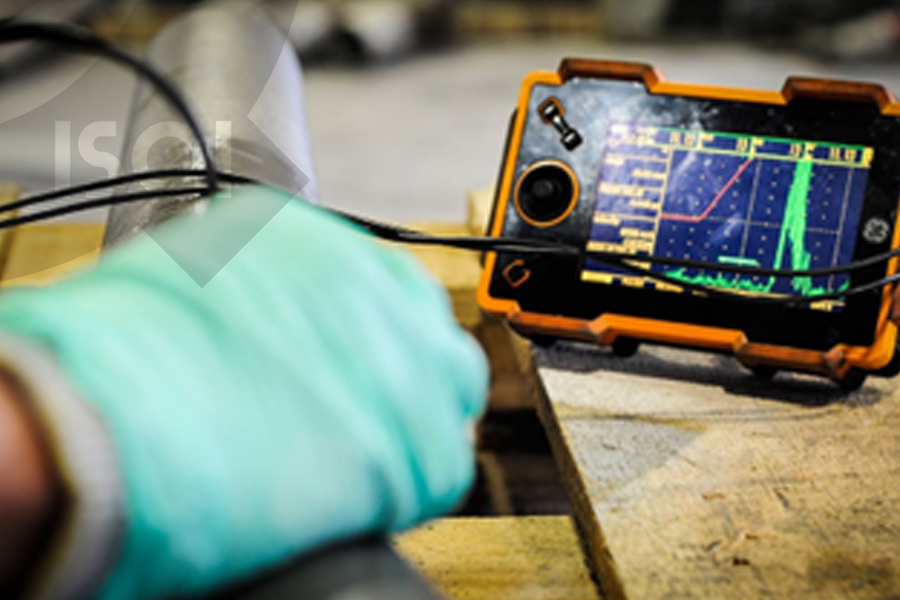
Key capabilities for modern NDT professionals include operating automated scanning systems, interpreting AI-assisted detection results, deploying robotic inspection tools in challenging environments, navigating digital workflows, and analyzing large datasets to support informed decisions. By combining manual expertise with digital proficiency, inspectors move beyond basic defect detection to become strategic contributors to asset integrity and operational efficiency.
The industry is also transitioning from reactive and scheduled inspections to predictive maintenance, risk-based inspection, and digital twin methodologies. Inspection data has evolved into a strategic asset, enabling organizations to anticipate issues, prioritize maintenance, and make data-driven decisions. AI and cloud-based analytics allow inspectors to identify subtle trends, optimize resource allocation, and prevent failures before they occur.
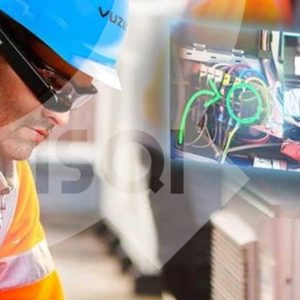
NDT 4.0 represents the convergence of traditional techniques with smart technologies. Automated scanners, intelligent sensors, cloud reporting platforms, and AI-driven analysis work together to enhance accuracy, speed, and consistency. A typical inspection may combine manual assessment, automated scanning, drone imagery, and real-time AI analysis, allowing inspectors to focus on critical decision-making while improving throughput and safety.
Emerging career paths reflect this evolution. Professionals with combined skills can pursue roles in digital inspection, robotics, asset integrity, and data analytics. Industries including oil & gas, aviation, renewable energy, manufacturing, and infrastructure increasingly seek multi-disciplined inspectors. Career opportunities now include positions such as Digital NDT Specialist, Advanced Robotics Operator, Integrity Engineer, Inspection Planner, and Asset Integrity Manager.
The shift toward NDT 4.0 also presents challenges. Many experienced inspectors lack AI, robotics, or data analytics experience, and certification programs require updates to cover digital competencies. Managing large datasets securely, ensuring regulatory compliance, and integrating new technologies into established workflows demands careful planning, validation, and ongoing education.
Training and certification are key to preparing the modern NDT workforce. Programs must cover traditional inspection techniques, digital literacy, robotics, automated systems, data analysis, and cloud-based reporting. Multi-tiered credentials spanning advanced NDT, digital inspection, AI, and predictive maintenance ensure inspectors can deliver reliable, actionable insights rather than simply performing inspections.
The future of NDT lies in the integration of human expertise with AI and digital technologies. Professionals who embrace continuous learning, adaptability, and innovation will shape the industry, lead multi-disciplinary teams, and set new standards for safety, reliability, and efficiency. The path forward is clear: combine conventional skills with digital mastery, embrace technology, and remain curious. Those who do will not only succeed but will define the next era of NDT, protecting assets and people worldwide.
Source: Source: NDT Scoop Inspection and Quality (Magazine Powered by ndtcorner.com)