

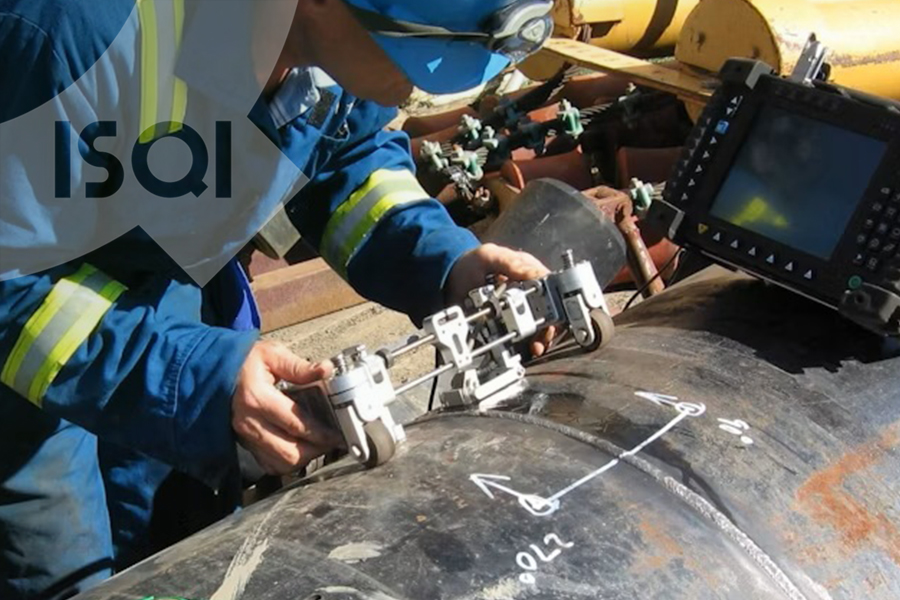
What is Non-Destructive Testing (NDT)?
Non-Destructive Testing (NDT) encompasses a group of inspection and evaluation techniques that assess the properties and integrity of materials, components, or structures without causing any damage. Unlike destructive testing, NDT allows organizations to maintain the usability and functionality of their assets while identifying defects or weaknesses that could compromise safety, performance, or compliance.
Industrial assets such as oil storage tanks, pipelines, wind turbine lightning protection systems, bridges, and aircraft components require frequent inspection for both maintenance and regulatory compliance. NDT is essential for detecting flaws—like cracks, voids, corrosion, or weld discontinuities—that may not be visible to the naked eye. By providing precise material characterization, NDT ensures operational safety, reliability, and cost-effective maintenance.
Most NDT methods use physical principles like sound waves, acoustic emissions, electromagnetic fields, X-rays, or gamma rays to evaluate internal or surface-level characteristics. Advanced NDT often combines multiple techniques to detect even the smallest irregularities with high accuracy.
Materials Tested Using NDT
NDT can be applied to a wide range of materials, including:
Metals and alloys (steel, aluminum, titanium), Plastics and polymers, Ceramics and composites, Concrete and coatings, Wood and fiberglass, Rubber and elastomers, Electronic components, Weldments, pipelines, castings, and forgings.
The Importance of Non-Destructive Testing
NDT serves two main purposes that are quality assurance and asset maintenance.
- Quality Assurance in Manufacturing
Industries with low tolerance for errors, such as aerospace and automotive, rely heavily on NDT. For instance, aircraft turbine blades must endure extreme heat, pressure, and rotational speed without failure. Engineers use ultrasonic testing (UT), radiographic testing (RT), or eddy current testing (ECT) to detect microscopic cracks, inclusions, or inconsistencies in the material. NDT allows comprehensive inspections without damaging the component, ensuring safety while maintaining production efficiency.
- Asset Maintenance and Safety Compliance
Regular NDT inspections are mandatory in many industries to comply with safety regulations and prevent hazardous failures. For example:
- Magnetic Particle Testing (MT): Detects surface cracks, shrinkage voids, and cold cuts in metals.
- Eddy Current Testing (ECT): Detects early corrosion or material loss in pipelines, boilers, and storage tanks.
- Radiography (RT): Reveals internal flaws in welds, castings, and critical components.
Early detection of defects prevents catastrophic failures, reduces repair costs, and extends the lifespan of equipment. Fortune Global 500 industrial companies lose over $1.5 trillion annually due to unplanned downtime—NDT mitigates this risk by enabling proactive maintenance.
Industries That Rely on NDT
NDT is critical across virtually every sector where safety, reliability, and performance are priorities:
Aerospace & Aviation, Automotive & Transportation, Oil & Gas, Power Generation
Manufacturing & Heavy Industry, Infrastructure & Construction, Telecommunications
Mining, Chemicals & Petrochemicals, Marine & Shipbuilding, Rail & Mass Transit.
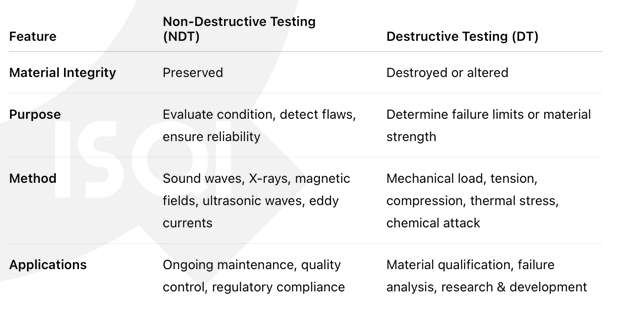
Destructive vs. Non-Destructive Testing: Key Differences
While both destructive and non-destructive testing aim to evaluate material properties, their approaches differ:
The Future of Non-Destructive Testing
With advances in technology, NDT continues to evolve. Emerging methods such as digital radiography, phased array ultrasonic testing, laser scanning, and AI-driven inspection systems are increasing accuracy, reducing inspection time, and enabling predictive maintenance. Integration of drones and robotics allows NDT in previously inaccessible or hazardous environments, such as offshore oil platforms, high-voltage power lines, and large industrial plants.
As industries aim for higher safety standards, longer asset lifespans, and cost-effective operations, NDT will remain an indispensable tool. Companies that adopt the latest NDT technologies not only ensure compliance and safety but also gain a competitive advantage through enhanced reliability, reduced downtime, and optimized maintenance planning.
In essence, Non-Destructive Testing is not just a method of inspection—it’s a strategic investment in safety, efficiency, and the longevity of critical assets.