
Crises such as earthquakes, large-scale fires, floods, industrial explosions, and chemical accidents are typically accompanied by primary damages. However, experience from major disasters worldwide shows that a significant portion of casualties and losses occur due to secondary incidents. Secondary incidents refer to events that take place after the primary disaster, triggered by damage to infrastructure, equipment, or the surrounding environment. In such situations, rapid and accurate technical Inspection of the incident site plays a crucial role in identifying these hidden risks and preventing further escalation.
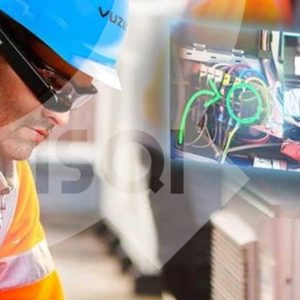
Inspection in crisis conditions is a set of specialized actions carried out to assess the status of the environment, structures, and equipment after an incident. These inspections are usually conducted by expert teams including safety specialists, structural engineers, firefighting units, and crisis management teams. The primary goal is to identify potential hazards and prevent secondary incidents that may threaten the lives of responders and residents in the affected area.
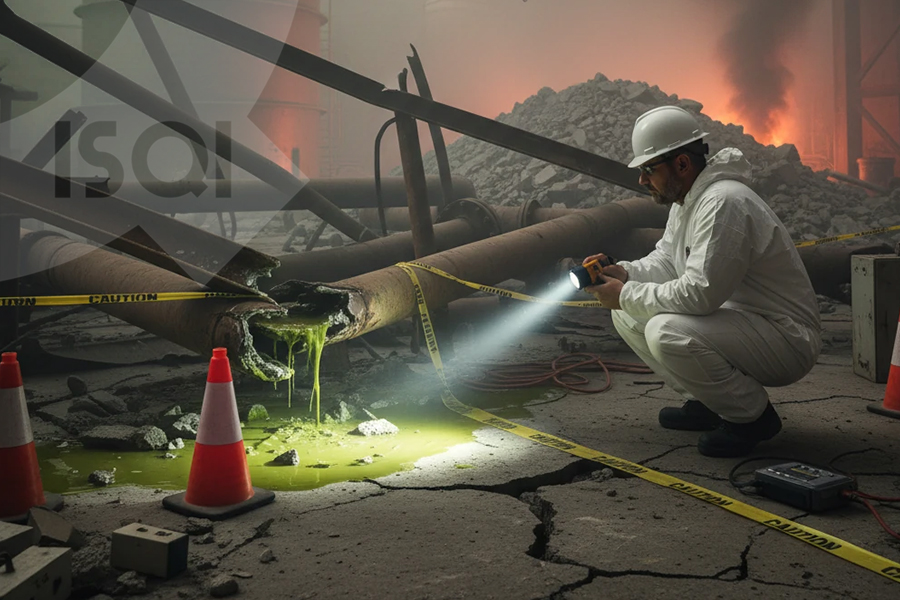
One of the most significant examples of secondary incidents is fires and explosions caused by gas leaks or the release of flammable materials. For example, during earthquakes, gas pipelines or fuel storage tanks may become damaged, and if not detected promptly, leaked gas can lead to severe explosions. In such cases, inspection teams examine gas lines, fuel systems, and industrial facilities to identify risks and prevent explosions by cutting off energy sources.
Another common secondary incident is the collapse of damaged buildings and structures. After events like earthquakes or explosions, many buildings may remain standing but be structurally weakened. Entering these buildings can lead to sudden collapse and loss of life. Therefore, structural inspection is one of the most essential actions after a crisis. Engineers assess cracks, deformations, and the condition of beams and columns to determine structural stability and, if necessary, issue evacuation or restricted-entry orders.
Chemical leaks and environmental contamination are also critical secondary incidents, especially in industrial zones. In events such as factory fires or refinery explosions, hazardous or toxic substances may be released. These substances can cause poisoning, contaminate water resources, or trigger dangerous chemical reactions. Inspection teams use environmental monitoring devices to measure contamination levels and define hazard zones.
Other secondary incidents include failures in essential networks such as electricity, water, and communications. Damage to power lines can cause electrocution or fires, while ruptured water or sewage lines may result in environmental contamination and public health issues. Therefore, inspection of critical urban infrastructure after a disaster plays an important role in reducing risks and ensuring safety.
Speed and accuracy are essential in crisis inspections. If potential hazards are not identified quickly, conditions may escalate into a new crisis. For this reason, many countries have established “rapid damage and safety assessment teams” whose responsibility is to conduct immediate inspections after an incident and report findings to crisis managers. These reports support decisions on evacuating high-risk areas, securing facilities, and continuing rescue operations.
In conclusion, inspection in crisis conditions is not limited to identifying initial damage—it is a vital tool for preventing secondary incidents. Rapid hazard identification, energy control, structural safety assessment, and monitoring of hazardous materials can prevent larger catastrophes. Therefore, strengthening inspection systems, training specialized personnel, and developing detailed post-crisis inspection guidelines are essential measures for reducing human and economic losses in major disasters.
Author: Zahra Shirband – International Relations Expert ISQI
Sources:
- National Disaster Management Organization. Principles and Fundamentals of Crisis Management.
- Haddow, G., Bullock, J., & Coppola, D. (2017). Introduction to Emergency Management. Butterworth-Heinemann.
- Federal Emergency Management Agency (FEMA). Damage Assessment and Safety Inspection Guidelines.
- International Labour Organization (ILO). Safety and Health in Emergency Response.
- National Fire Protection Association (NFPA). NFPA 1600: Standard on Disaster/Emergency Management and Business Continuity Programs.