
With the expansion of urbanization and the continuous increase in the number of motor vehicles, air pollution has become one of the most important environmental challenges worldwide. A significant portion of this pollution is caused by emissions from vehicle exhaust systems. During the fuel combustion process in engines, various compounds are produced, some of which have harmful effects on human health and the environment. Among the most important pollutants are carbon monoxide (CO), unburned hydrocarbons (HC), nitrogen oxides (NOx), and particulate matter. In this regard, a set of tests known as “vehicle emission tests” has been designed and implemented to control and reduce the emission of these pollutants.
Vehicle emission tests are a set of measurement and evaluation methods carried out to determine the level of pollutant emissions from vehicles. The main purpose of these tests is to ensure compliance with environmental standards and to reduce the negative impact of transportation on air quality. These tests are usually conducted at technical inspection centers or specialized automotive laboratories, and their results determine whether a vehicle is environmentally acceptable or not.
One of the most common evaluation methods is measuring exhaust gases using a gas analyzer. This device is capable of measuring the concentration of various gases such as CO, CO₂, HC, and in some cases NOx. In this test, the vehicle is operated under different conditions such as idle speed and higher engine speeds to evaluate its emission behavior in various states. The obtained results are then compared with defined standard limits, and if they exceed the permissible threshold, the vehicle is declared failed.
In addition to this method, smoke opacity testing is particularly important for diesel vehicles. In diesel engines, in case of fuel system malfunctions or incomplete combustion, soot production increases. In this test, an opacity meter is used to measure the reduction of light passing through the exhaust smoke. The higher the smoke opacity, the greater the incomplete combustion and the higher the level of emissions.
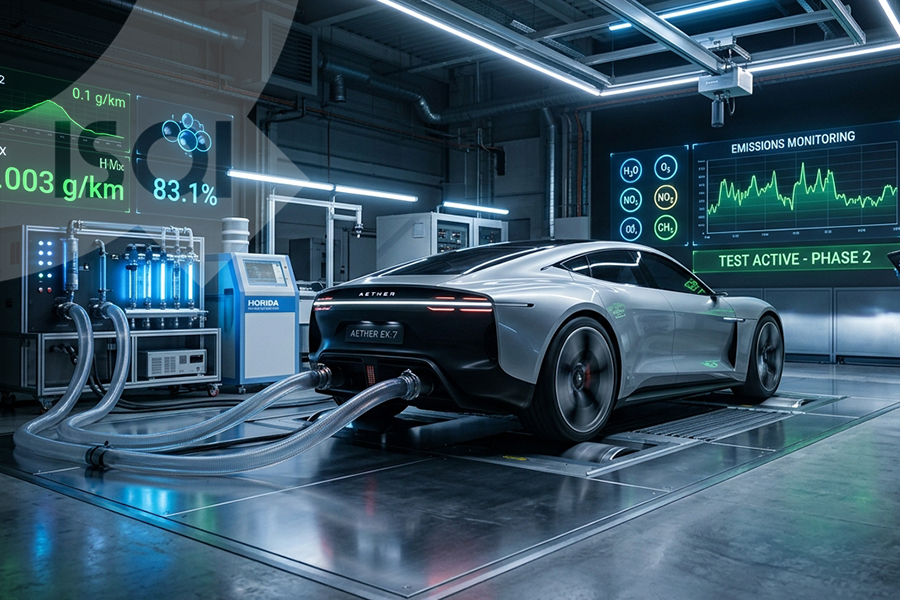
In more advanced centers, tests simulating real driving conditions are also used. In this method, the vehicle is placed on a dynamometer, and driving conditions at different speeds and loads are simulated. At the same time, emission levels are measured. This method is more accurate than static tests because it evaluates the vehicle’s behavior under conditions closer to real-world driving.
Environmental standards play a crucial role in defining permissible emission limits for vehicles. Among these, the European “Euro standards” are considered one of the most important international frameworks. These standards are classified from Euro 1 to Euro 6, with higher numbers imposing stricter limits on pollutant emissions. Many countries, including Iran, use these standards as a basis for vehicle emission control.
Several factors influence vehicle emissions, including engine technical condition, fuel quality, fuel system performance, catalytic converter health, and engine tuning. Any malfunction in these components can lead to increased pollutant emissions. Therefore, regular servicing and proper vehicle maintenance play an important role in reducing pollution.
Emission tests not only help control air pollution but also improve vehicle technical performance. Regular testing enables early detection of technical faults and prevents more serious problems. This not only reduces emissions but also decreases fuel consumption and increases engine lifespan.
On the other hand, technological advancements in the automotive industry have played a significant role in reducing emissions. The use of advanced catalytic converters, electronic fuel injection systems, and the design of fuel-efficient engines are among the effective solutions for reducing pollutant emissions. In addition, the development of hybrid and electric vehicles represents an important step toward reducing dependence on fossil fuels and improving air quality.
Overall, vehicle emission tests are one of the key tools in managing and controlling air pollution. Proper implementation of these tests and adherence to environmental standards can significantly reduce pollutant emissions and improve urban quality of life. Given the growing number of vehicles, the development of monitoring infrastructure and increasing public awareness about proper vehicle maintenance are essential requirements for achieving sustainable development and environmental protection.
Author: Zahra Shirband – International Relations Expert ISQI
Sources:
- World Health Organization (WHO), Air Pollution and Health
- European Environment Agency (EEA), Road Transport Emissions Report
- United States Environmental Protection Agency (EPA), Vehicle Emissions Testing Standards
- International Council on Clean Transportation (ICCT), Emission Standards and Testing
- European Commission, Euro Vehicle Emission Standards