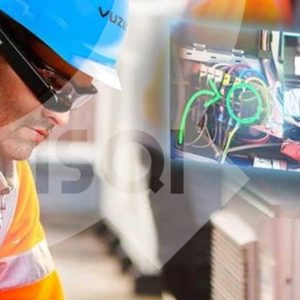

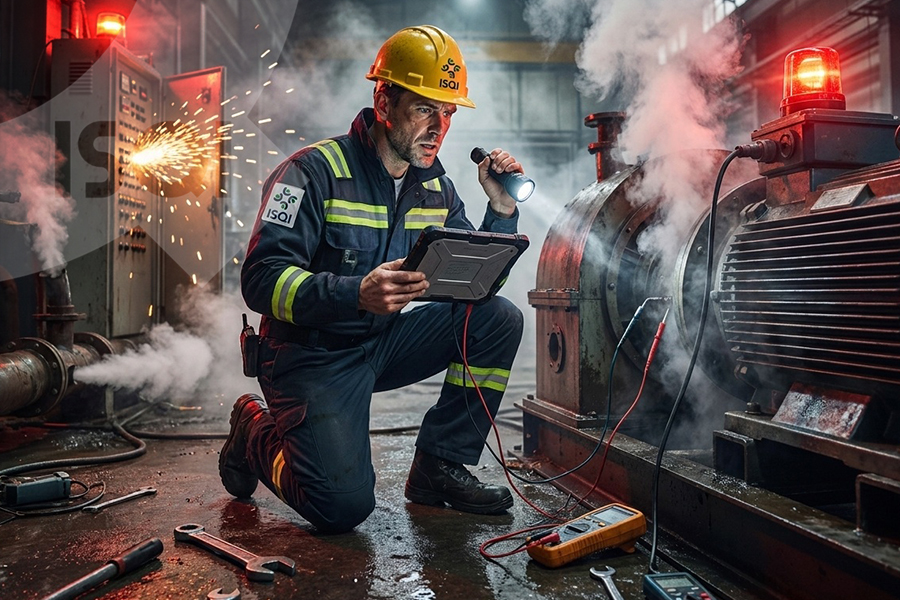
In today’s world, organizations, industries, and even service institutions are constantly exposed to various natural, technical, and human hazards. Many major crises initially begin with a small incident or minor defect, but due to the lack of timely identification or effective supervision, they escalate into large-scale crises. In this context, the inspection system is considered one of the most important managerial tools for early identification of problems and preventing their escalation. Power plant inspection is essentially a systematic and planned form of supervision aimed at evaluating performance, identifying deviations from standards, and proposing corrective actions. If this process is properly implemented, it can prevent a limited incident from developing into an organizational, social, or environmental crisis.
The Concept of Inspection and Its Relationship with Crisis Management
In its simplest definition, inspection refers to the systematic evaluation of activities, equipment, processes, and employee performance with the aim of identifying deficiencies and preventing hazards. In many management systems such as safety management, risk management, and crisis management, Power plant inspection is recognized as one of the most important tools for control and prevention.
Crisis management generally includes four main stages:
prevention, preparedness, response, and recovery. Among these stages, prevention is of critical importance because the measures taken at this stage can significantly reduce the likelihood of a crisis occurring. Inspection plays a central role precisely at this stage; by identifying weaknesses and potential hazards, it allows for their correction and control before an incident occurs.
The Role of Power plant inspection in Identifying and Controlling Hazards
One of the most important functions of inspection is the early identification of hazards. Many risks initially appear in the form of small warning signs, such as minor equipment malfunctions, failures in safety systems, or employees’ noncompliance with work instructions. If these issues are not detected in their early stages, they can quickly develop into serious incidents.
The Role of Inspection in Reducing the Severity of Incidents
Inspection is not limited to preventing incidents; it also plays an important role in reducing the severity and scope of potential damages. In many cases, an incident cannot be completely prevented, but effective monitoring and inspection systems can help control its consequences.
For example, regular Power plant inspection of fire suppression systems, emergency equipment, and emergency exit routes can increase the speed of response and the level of control during an incident. In such conditions, even if an accident occurs, the likelihood of it escalating into a widespread crisis is significantly reduced.
The Role of Inspection in Strengthening Safety Culture
Another important function of inspection is the creation and strengthening of a safety culture within an organization. When employees know that their activities and performance are continuously evaluated, they are more likely to comply with safety standards and procedures.
Safety culture refers to a set of beliefs, attitudes, and behaviors that recognize safety as a fundamental value within an organization. Regular inspections, providing feedback to employees, and following up on corrective actions help integrate safety into employees’ daily behavior. Research shows that organizations with strong Power plant inspection systems generally experience lower rates of accidents and crises.
In many advanced organizations, findings from inspections are recorded in information databases and used for employee training and future planning. This allows organizations to learn from past experiences and reduces the likelihood of similar incidents recurring.
An effective inspection system usually includes the following elements:
– A clear schedule for periodic inspections
– The use of standardized checklists
– The presence of specialized and trained inspectors
– Accurate recording and documentation of results
– Follow-up on corrective actions
The presence of these elements ensures that the Power plant inspection process is implemented systematically and that its outcomes effectively improve safety and reduce risks.
Conclusion
Inspection is one of the most important managerial tools in crisis prevention. By enabling early identification of hazards, correcting deficiencies, strengthening safety culture, and providing a foundation for organizational learning, this process plays a significant role in reducing the likelihood of incidents and preventing them from escalating into large-scale crises. Therefore, organizations should institutionalize Power plant inspection as a continuous and scientific process within their management systems and utilize its results in managerial decision-making.
Author: Zahra Shirband – International Relations Expert ISQI
Sources:
- Haddow, G., Bullock, J., & Coppola, D. (2020). Introduction to Emergency Management. Butterworth-Heinemann.
- Reason, J. (1997). Managing the Risks of Organizational Accidents. Ashgate Publishing.
- Smith, D. (2006). Crisis Management: Practice in Search of a Paradigm. Journal of Contingencies and Crisis Management.
- Farhadi, F., & Rahimi, M. (2019). Crisis Management and Prevention Strategies in Organizations. Tehran: Academic Publications.
- Babaei, A., & Hosseini, R. (2017). The Role of Safety Inspection in Preventing Industrial Accidents. Quarterly Journal of Occupational Safety and Health.