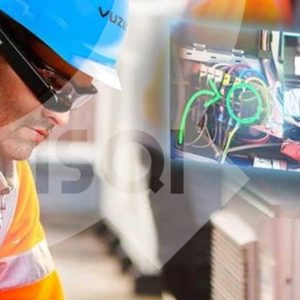

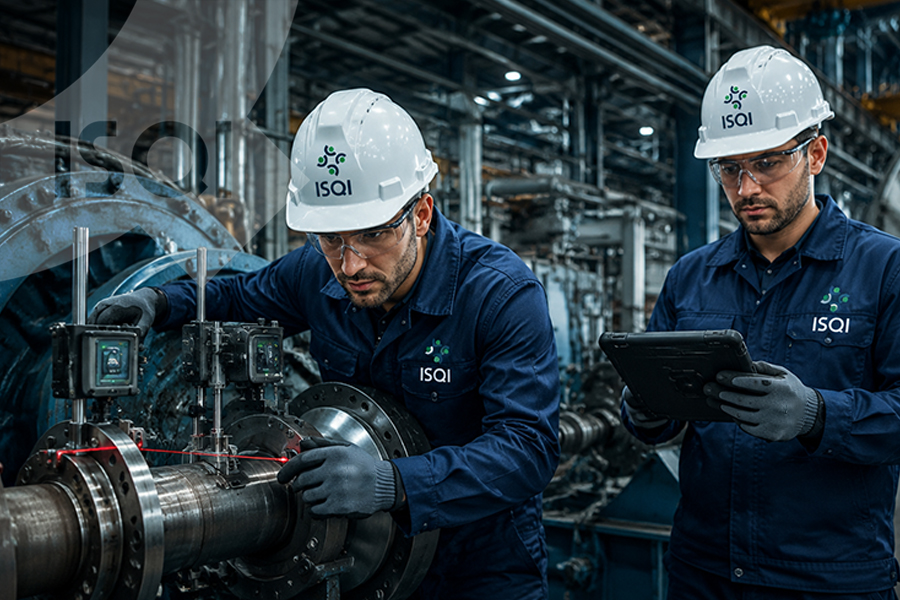
Technical inspection and health assessment of industrial structures and machinery following natural disasters (e.g., earthquakes, floods) or operational incidents (e.g., fires, explosions) constitute a core pillar of Business Continuity Management (BCM). This process prevents sudden and prolonged production shutdowns by identifying latent damages before they escalate into complete system failures.
- Identification of Latent Damages
The greatest post-crisis risk lies in damages invisible to the naked eye. In structures, this may involve loosened bolted connections or hairline cracks in concrete members that expand rapidly under normal operational loads. In machinery, severe vibrations during a crisis can cause microscopic shaft misalignments or bearing damage.
Impact on Production: Timely inspection (utilizing Non-Destructive Testing (NDT) methods like ultrasonic or thermography) allows these damages to be identified and scheduled for repair during planned intervals, rather than during active production.
- Prevention of the “Domino Effect” in Integrated Systems
In modern factories, processes are interconnected in a chain. Failure of a single “bottleneck” machine due to lack of post-crisis inspection can halt the entire production line.
Impact on Production: Structured technical inspection—based on frameworks such as Risk-Based Inspection (RBI)—identifies critical equipment. Prioritizing these assets significantly reduces the risk of a plant-wide shutdown.
- Safety Management and Regulatory Compliance
A crisis alters the workplace risk profile. Resuming operations without safety inspector clearance is not only illegal but increases the risk of human or environmental accidents, which could lead to facility closure by regulatory authorities.
Impact on Production: Formal, documented inspections guarantee legal operating permits and prevent sudden shutdowns mandated by government agencies or insurance providers.
- Supply Chain Optimization (Lead Time Management)
Many industrial components have long lead times. Rapid post-crisis inspection allows managers to generate a list of damaged parts and immediately initiate procurement or repair orders.
Impact on Production: Delayed inspection inevitably leads to delayed procurement. In such cases, total downtime includes waiting time for parts. Early Technical inspection reduces “downtime” to the absolute minimum time required for repair.
Recommended Risk Mitigation Strategy
For maximum effectiveness, post-crisis inspection must be integrated into an Emergency Response Plan (ERP) comprising the following stages:
- Rapid Visual Screening: To ensure there is no immediate threat to personnel.
- Detailed Inspection: Utilizing precision measuring tools (laser alignment, NDT, vibration analysis).
- Stability Analysis: Verifying whether structures and equipment still operate within their original Design Envelope.
Post-crisis inspection is not an overhead cost; it is an investment in maintaining operational continuity. The cost of a meticulous inspection is negligible compared to the losses incurred from even a single day of unplanned production downtime.
Author: Zahra Shirband – International Relations Expert ISQI
Sources:
- International Organization for Standardization. (2019). ISO 22301: Security and resilience — Business continuity management systems — Requirements.
- American Petroleum Institute. (2016). API 510: Pressure Vessel Inspection Code: In-service Inspection, Rating, Repair, and Alteration.
- Federal Emergency Management Agency (FEMA). (2012). FEMA P-74: Reducing the Risks of Nonstructural Earthquake Damage — A Practical Guide.
- Moubray, J. (1997). Reliability-centered Maintenance (RCM II). Industrial Press Inc.
- Planning and Budget Organization of Iran. (2015). Instruction for Seismic Retrofitting of Existing Buildings (Publication No. 360). Road, Housing and Urban Development Research Center.