

In today’s turbulent world – where technological, economic, and environmental changes occur at unprecedented speed – organizations face a new reality: crises are no longer a distant possibility but an inevitable part of the business lifecycle. In such an environment, the concept of organizational resilience – the ability to anticipate, absorb, and recover from crises—has gained exceptional importance. Yet experience shows that many organizations, despite having crisis management plans, are still caught off guard when a crisis occurs. The reason for this gap often lies in overlooking one of the key elements of this system: crisis technical inspection – a missing link without which organizational resilience remains fundamentally incomplete.
The Concept and Role of Crisis technical Inspection
Crisis inspection is not a simple audit or a post-event review. It is a structured, dynamic, and forward-looking process designed to identify threats before they escalate into full-blown crises. This type of technical inspection combines risk management, data analysis, organizational behavior, and even interdisciplinary approaches such as systems analysis. Its ultimate goal is to reduce “surprise” and strengthen “preparedness.”
Crisis inspection acts as the organization’s early warning system – one that identifies abnormal patterns, soft deviations, small recurring errors, and hidden vulnerabilities, preventing crises from emerging out of routine operations.
When Crisis Inspection Is Absent, Resilience Becomes an Illusion
In many organizations, inspections are checklist‑driven and carried out merely to meet legal or minimal standard requirements. Such inspections are usually backward-looking and lack analytical depth. In these settings, crises are not only poorly predicted but their consequences may also intensify, since structural and cultural gaps remain hidden until the crisis occurs.
An organization that “hides mistakes” can never “learn from them.”
Global Best Practices in Crisis technical Inspection
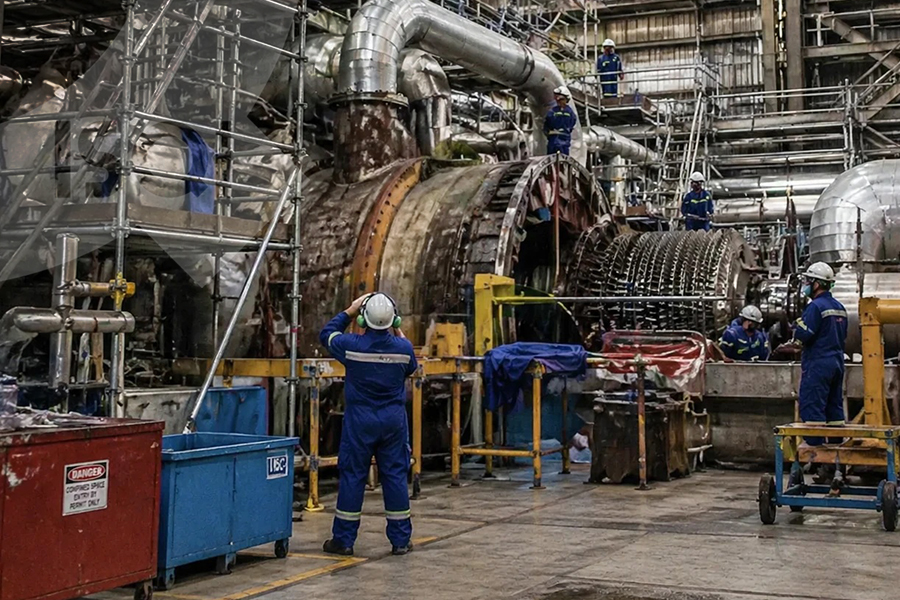
To understand the strategic role of crisis technical inspection, global experiences are highly instructive. Two notable examples are Norway’s energy sector and Japan’s aviation industry—both of which have achieved remarkable resilience by relying on crisis inspection systems.
Model 1: Norway’s Energy Sector – Forward-Looking Inspections in Oil and Gas
As one of the world’s largest energy producers, Norway has long faced risks such as offshore platforms, harsh climatic conditions, fires, chemical leaks, and environmental crises. Yet the frequency of major crises in this sector is astonishingly low. This success stems from a highly advanced and independent crisis technical inspection system.
In Norway, the Petroleum Safety Authority (PSA) employs a “proactive monitoring” approach that focuses on:
– analyzing employee behavioral trends
– reviewing operational conditions before deviations occur
– identifying weak signals of risk
– continuous equipment data monitoring
– unannounced, non‑periodic inspections
PSA believes that crises usually begin with a “single drop.” The goal of these inspections is to detect those small drops before they become an ocean. For this reason, Norway is one of the few countries that has separated crisis inspection from traditional auditing, turning it into an independent field with dedicated tools. This separation has enabled the Norwegian energy sector to achieve exceptional resilience against both technical and human-related crises.
Model 2: Japan’s Aviation Industry – A Learning Culture and “Future-Oriented” Inspection
Aviation is one of the most sensitive industries in the world, yet what makes Japan’s aviation sector a global benchmark is not just advanced technology—it is a crisis technical inspection system grounded in a culture of learning.
In Japan, crisis inspection is not limited to identifying errors; it actively seeks to uncover “conditions that may one day lead to error.” Implemented through the Safety Management System (SMS) and Predictive Safety principles, this approach includes:
– voluntary, non‑punitive error reporting
– continuous analysis of flight data and crew behavior
– real-time monitoring of critical systems
– training with complex, unpredictable scenarios
– independent teams of “crisis inspectors”
A well-known feature of this industry in Japan is Hazard Prediction Training. In this method, inspectors and personnel are continuously trained to detect potential hazards—even when they are minor, ambiguous, or unlikely. This culture has made Japan one of the safest aviation systems in the world.
Linking These Experiences to Organizational Resilience
Lessons from Norway and Japan demonstrate that resilience is not achieved merely through planning or meeting standards; it requires active, independent, data-driven crisis technical inspection. Such inspections enable organizations to:
– detect crisis signals earlier
– uncover abnormal systemic behaviors
– strengthen reporting and learning cultures
– and turn each crisis into an opportunity for innovation
Resilience is meaningful only when an organization is prepared before a crisis, stays composed during it, and learns afterward. This cycle cannot function without crisis inspection.
Conclusion
Crisis inspection is the missing link that many organizations still fail to take seriously. Yet global experience shows that organizations investing in this element not only reduce their vulnerability but become more “anticipatory,” “agile,” and “learning‑oriented.” As demonstrated by Norway’s energy sector and Japan’s aviation industry, crisis technical inspection is not merely a control tool but the backbone of organizational resilience.
Author: Zahra Shirband – International Relations Expert ISQI
Sources
- Norwegian Petroleum Directorate (NPD), Facts 2024: The Norwegian Petroleum Sector.
- Ministry of Energy of Norway, The Energy Sector in Norway.
- International Energy Agency (IEA), Norway 2022 Energy Policy Review.
- U.S. Energy Information Administration (EIA), Norway Country Analysis Brief.
- Equinor, Annual Report 2024.
- Government Pension Fund Global, Annual Report 2024.
- Energy Institute, Statistical Review of World Energy 2024.