

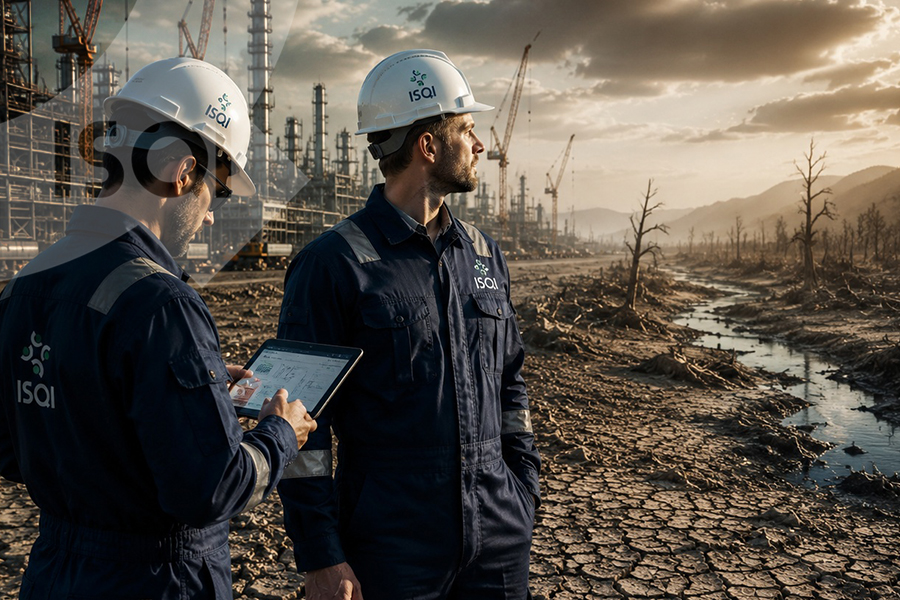
Technological developments over the past two centuries have played a decisive role in economic growth, improving quality of life, and expanding human welfare. From the Industrial Revolution to the digital age, technology has increased production, facilitated communication, and raised life expectancy. However, these same advances have in some cases produced deep and sometimes irreversible environmental consequences. In contemporary legal and environmental literature, the concept of “ecocide” is used to describe widespread, severe, and long‑term destruction of the environment.
Ecocide refers to the extensive destruction of an ecosystem in such a way that its natural capacity for regeneration is eliminated or severely reduced. This concept becomes particularly significant when environmental damage caused by human activities—including the use of certain industrial technologies—reaches a level that threatens species survival, food security, public health, and climate stability.
- Fossil Fuel Technologies and Climate Change
One of the most important examples of how industrial technology contributes to large‑scale environmental destruction is the use of fossil fuels. Technologies related to oil and gas extraction, deep‑water drilling, shale oil extraction (fracking), and coal‑fired power plants formed the backbone of the twentieth‑century industrial economy.
However, the combustion of fossil fuels has led to the massive release of greenhouse gases such as carbon dioxide (CO₂) and methane (CH₄). These gases intensify the greenhouse effect and contribute to global warming. The consequences of this process include:
– Rising global average temperatures
– Melting polar ice and rising sea levels
– Increasing frequency and intensity of droughts, floods, and storms
– Destruction of natural habitats
If current trends continue, climate change could lead to widespread destruction of marine, forest, and polar ecosystems—a situation that some researchers consider a potential form of global ecocide.
- Industrial Agriculture and Ecosystem Pollution
The Green Revolution in the second half of the twentieth century significantly increased food production through the use of modern agricultural technologies such as chemical fertilizers, pesticides, and advanced machinery. Nevertheless, the excessive use of these technologies has produced widespread environmental impacts.
Nitrogen and phosphate fertilizers entering water bodies cause a phenomenon known as eutrophication, which leads to excessive growth of algae. This process eventually reduces oxygen levels in water and results in the death of aquatic organisms. The formation of “dead zones” in some seas is an example of this phenomenon.
In addition, the extensive use of pesticides has reduced populations of pollinating insects, particularly bees. Since pollination is essential for the production of many agricultural crops, this trend can threaten global food security.
Monoculture farming and heavy mechanization have also contributed to soil erosion and biodiversity loss. If this trend continues, the natural regenerative capacity of soil may decline, leading to large‑scale degradation of agricultural land.
- Mining and Heavy Industries
Advances in mining technology have made it possible to extract natural resources on a massive scale. Open‑pit mining, the extraction of rare metals for electronics and batteries, and deep underground resource exploitation are examples of these technologies.
However, such activities are often associated with several environmental consequences:
– Complete destruction of vegetation cover and local habitats
– Contamination of water resources with heavy metals such as mercury, lead, and cadmium
– Production of large amounts of toxic waste
In some cases, the failure of tailings dams has released millions of cubic meters of toxic sludge into rivers, severely disrupting regional ecosystems for decades. Such incidents represent severe and long‑term environmental damage that can be analyzed within the framework of ecocide.
- The Petrochemical Industry and the Plastic Crisis
Plastic production technology is one of the major achievements of the petrochemical industry. Because plastic is lightweight, durable, and inexpensive, it is widely used in industries ranging from packaging to medicine. However, mass production and widespread consumption without effective waste management have led to a global plastic pollution crisis.
Millions of tons of plastic enter the oceans each year. Over time, these materials break down into tiny particles known as microplastics, which enter the food chain and have even been detected in the human body.
Plastic accumulation in the oceans leads to the death of marine animals, seabirds, and damage to coastal ecosystems. Since plastics may take hundreds of years to decompose, their environmental impacts are extremely long‑lasting and widespread.
- Military Technologies and Environmental Destruction
Military technologies have also caused extensive ecosystem destruction in some cases. The use of chemical agents to destroy forests, nuclear testing, and the deployment of polluting weapons are examples. Radioactive contamination can persist in the environment for decades or even centuries, threatening the health of humans and other living organisms.
- Structural Factors Intensifying Ecocide
Three structural factors contribute significantly to the role of technology in environmental destruction:
- A development model based on unlimited growth: The global economy relies on the continuous expansion of production and consumption.
- Externalization of environmental costs: The environmental damage caused by production is often not reflected in the price of goods.
- Weak regulations and oversight: In many countries, environmental standards are either insufficient or poorly enforced.
Conclusion
Industrial technologies are powerful tools that can contribute both to human prosperity and to large‑scale environmental destruction. When technological development occurs without regard for the Earth’s ecological limits, sustainability principles, and ethical responsibility, the likelihood of ecocide increases.
However, the same technological capacity can also be used to promote renewable energy, develop a circular economy, improve resource efficiency, and restore ecosystems. The future of the environment therefore depends not on rejecting technology, but on guiding it through responsible governance and effective regulation. Establishing international legal frameworks, strengthening corporate accountability, and raising public awareness are essential steps toward preventing large‑scale environmental destruction.
Author: Zahra Shirband – International Relations Expert ISQI
Sources:
- Carson, R. (1962). Silent Spring. Houghton Mifflin.
- Higgins, P. (2010). Eradicating Ecocide. Shepheard‑Walwyn.
- IPCC. (2023). Sixth Assessment Report (AR6) Synthesis Report.
- Rockström, J. et al. (2009). “A Safe Operating Space for Humanity.” Nature, 461, 472–475.
- Steffen, W. et al. (2015). “Planetary Boundaries: Guiding Human Development on a Changing Planet.” Science, 347(6223).
- UNEP. (2022). Global Environment Outlook 6. United Nations Environment Programme.