

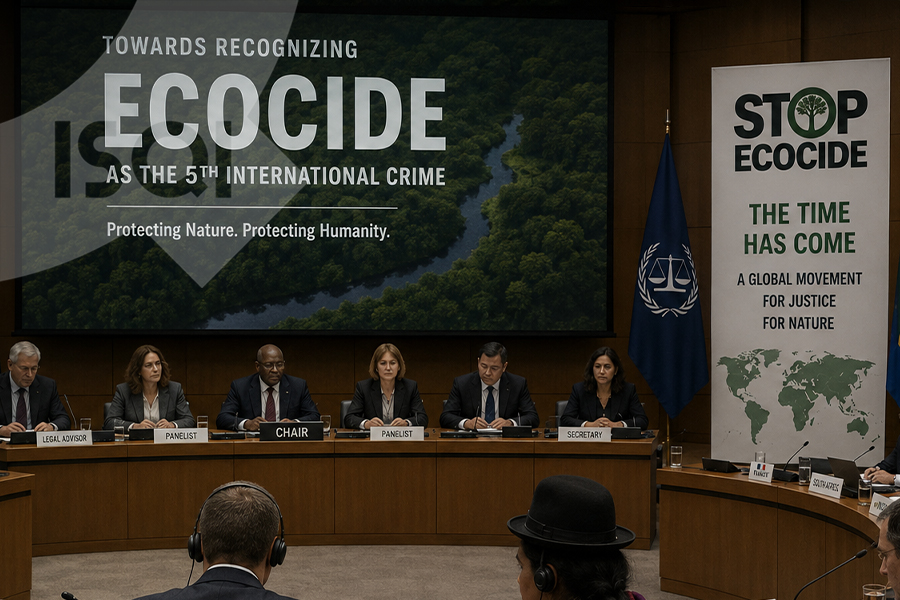
In recent decades, large-scale environmental destruction has become one of the most significant global challenges. Massive deforestation, severe pollution of water resources, excessive extraction of natural resources, and the destruction of ecosystems have had profound consequences for human health and the survival of many species. In this context, the concept of “ecocide” has emerged as a new legal idea. Ecocide generally refers to extensive, severe, or long-term damage to the environment whose impacts on ecosystems and human communities are irreparable or extremely difficult to restore. In recent years, legal scholars, environmental activists, and some governments have attempted to recognize ecocide as an international crime. Examining this development within the framework of comparative environmental law shows that different countries have adopted varying approaches toward the criminalization of severe environmental destruction.
At the national level, some countries adopted criminal laws addressing large-scale environmental destruction even before the global debate on ecocide intensified. For example, in Russia, the crime of “ecocide” is explicitly included in the country’s criminal code. According to Article 358 of the Russian Criminal Code, the mass destruction of flora and fauna, the poisoning of water or air, or other acts capable of causing an environmental catastrophe are criminalized as ecocide. This provision demonstrates that it is possible to establish criminal liability for severe environmental destruction even within national legal systems.
In some other countries, legal provisions close to the concept of ecocide can also be found. For instance, in France, a law adopted in 2021 under the Climate and Resilience Act introduced the notion of an “ecocide offense.” Although the definition provided in this law is narrower than the definition proposed at the international level, it nonetheless allows for severe and intentional environmental damage to be punished with significant penalties for the first time within the French legal system. Meanwhile, countries in Latin America such as Ecuador and Bolivia have taken a different approach. By recognizing the “rights of nature” in their constitutions, these countries have created a stronger legal foundation for protecting ecosystems. In such legal systems, nature is not viewed merely as an economic resource but as a rights-bearing entity.
In contrast, many countries still do not recognize ecocide as an independent crime in their legal systems. Instead, environmental destruction is addressed through scattered regulations related to pollution, natural resource damage, or crimes against public health. For example, in the United States, extensive environmental regulations such as the Clean Air Act and the Clean Water Act exist, yet large-scale ecosystem destruction is not defined as a distinct crime under the title of ecocide. In many jurisdictions, penalties for environmental crimes are often limited to financial fines, which may not provide sufficient deterrence against large-scale environmental harm.
At the international level, the idea of criminalizing ecocide has primarily been linked to efforts to add it to the Rome Statute of the International Criminal Court (ICC). Currently, the ICC has jurisdiction over four core international crimes: genocide, crimes against humanity, war crimes, and the crime of aggression. Some legal scholars and activists have proposed that ecocide should be added to this list as the “fifth international crime.” In 2021, an Independent Expert Panel of international lawyers proposed a legal definition of ecocide. According to this proposal, ecocide consists of “unlawful or wanton acts committed with knowledge that there is a substantial likelihood of severe and either widespread or long-term damage to the environment.”
Alongside legal efforts, social movements and global campaigns have played a crucial role in advancing the idea of criminalizing ecocide. One of the most prominent initiatives is the “Stop Ecocide” movement, launched by international activists and legal experts. This campaign aims to persuade governments to support amendments to the Rome Statute of the International Criminal Court. Numerous non-governmental organizations, scientists, and public figures have also supported the initiative, viewing it as a mechanism to hold governments and large corporations accountable for widespread environmental destruction.
Furthermore, several national parliaments and regional institutions have begun discussing the possibility of recognizing ecocide within legal frameworks. For example, the European Parliament has repeatedly supported examining the potential recognition of ecocide within international law. In addition, legislative debates are underway in some countries, such as Belgium and the Netherlands, regarding the incorporation of the concept of ecocide into their domestic legal systems.
Despite these developments, the criminalization of ecocide faces several challenges. One of the main difficulties lies in defining the precise criteria for “severe, widespread, or long-term” environmental damage. Moreover, some governments fear that such a crime could impose strict limitations on major economic activities such as natural resource extraction or large industrial projects. On the other hand, supporters of criminalizing ecocide argue that without strong criminal mechanisms, large-scale environmental destruction will continue and its consequences for future generations may be irreversible.
Overall, a comparative review of national laws indicates that the concept of ecocide is gradually moving from a theoretical idea toward a legal reality. Although a global consensus on its definition and criminalization has not yet been fully achieved, current legal and social trends suggest that the international community is increasingly moving toward recognizing criminal responsibility for large-scale environmental destruction. In the future, ecocide may become one of the most important legal tools for protecting the planet and ensuring environmental justice.
Sources:
- Higgins, Polly. Eradicating Ecocide: Laws and Governance to Prevent the Destruction of our Planet. Shepheard-Walwyn, 2015.
- Independent Expert Panel for the Legal Definition of Ecocide. Proposed Legal Definition of Ecocide, 2021.
- Sands, Philippe & Peel, Jacqueline. Principles of International Environmental Law. Cambridge University Press.
- Stop Ecocide Foundation. www.stopecocide.earth
- Russian Criminal Code, Article 358 (Ecocide).
- European Parliament Reports on Environmental Crime and Ecocide Debates.