
Introduction: Understanding Quality 4.0 in the Age of Smart Robotics
The transition to smart factories has introduced a new paradigm known as Quality 4.0. Inspired by Industry 4.0 principles, Quality 4.0 integrates automation, artificial intelligence, big data, and connected systems into quality management processes.
In robotic manufacturing environments, Quality 4.0 represents the evolution from traditional inspection methods to intelligent, data-driven quality ecosystems.
Unlike conventional quality approaches that rely heavily on post-production inspection, Quality 4.0 emphasizes:
- Real-time monitoring
- Predictive analytics
- Smart sensing technologies
- Autonomous decision-making
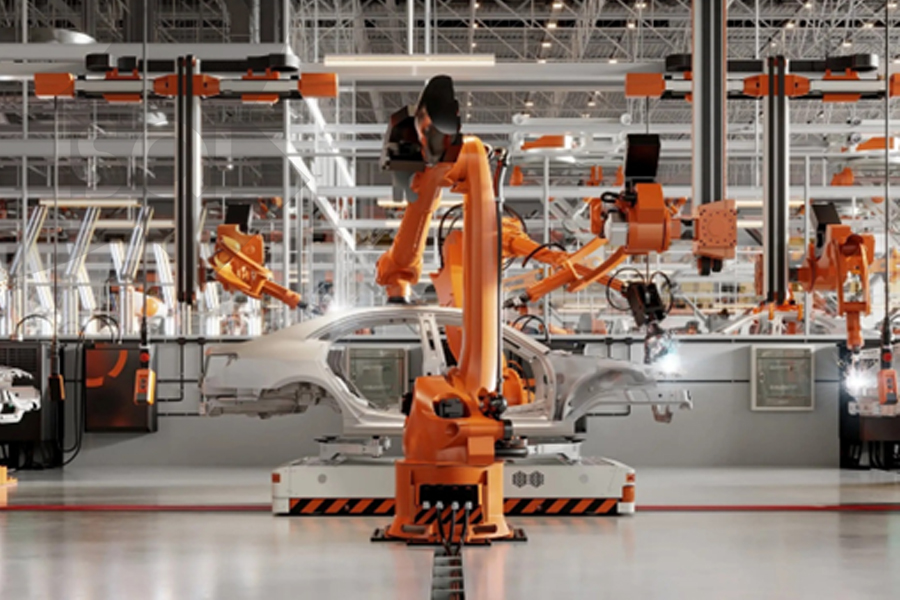
As robots increasingly perform critical manufacturing operations such as welding, assembly, and finishing, the importance of embedding Quality principles directly into robotic systems becomes essential.
Why Quality 4.0 Is Critical in Robotic Production Systems
Robotic production lines operate at high speed and precision. While this increases productivity, it also means that errors can propagate rapidly. A defect generated by a robot can multiply within minutes.
This is where Quality changes the game. Instead of reacting to defects after production, intelligent systems detect anomalies during the process itself.
Quality in robotics focuses on three core dimensions:
- Product Quality – Ensuring parts meet design specifications
- Process Quality – Monitoring stability and parameter consistency
- System Quality – Evaluating robot performance and control accuracy
By combining robotics with data analytics and smart sensors, manufacturers achieve a continuous quality feedback loop.
Machine Vision as a Core Pillar of Quality 4.0
Machine vision is one of the most widely implemented technologies supporting Quality in robotic manufacturing.
Advanced robotic vision systems use:
- Edge detection algorithms
- Pattern recognition models
- Image segmentation
- Deep learning (CNNs and neural networks)
In welding applications, AI-driven vision systems can classify defects in real time. In additive manufacturing, laser profiling combined with machine learning enables layer-by-layer quality validation.
The advantages include:
- Non-contact inspection
- High-speed data processing
- Adaptability to product variations
- Integration with digital production platforms
However, effective Quality implementation requires robust datasets and optimized computational resources to ensure model accuracy.
Thermographic and Radiographic Inspection in Quality 4.0
Thermographic systems use infrared cameras to detect temperature anomalies that may indicate cracks or bonding defects. When integrated into robotic cells, these systems enable automated crack detection and weld validation.
Similarly, radiographic (X-ray) inspection allows deep internal visualization of parts. Robotic X-ray systems are widely applied in aerospace and automotive industries to detect internal voids and structural inconsistencies.
In this Quality age framework, these inspection technologies are not isolated tools. Instead, they are connected to centralized data systems that:
- Store inspection history
- Analyze trends
- Predict failure risks
- Optimize robotic parameters
This data integration is what distinguishes Quality from traditional quality control systems.
From Reactive Inspection to Predictive Intelligence
Traditional inspection identifies defects after they occur. Quality 4.0 transforms inspection into predictive intelligence.
By integrating robotics with:
- Machine learning models
- Cloud data analytics
- Real-time dashboards
- Automated alerts
Manufacturers can detect deviations before they become costly failures.
Source: Quality control in manufacturing – review and challenges on robotic applications