
In the automotive industry, improving safety has always been one of the most important goals of engineers and vehicle manufacturers. In the past, the primary focus was on designing vehicles that could reduce occupant injuries in the event of a crash; however, today the automotive industry has shifted its approach toward preventing accidents before they occur. In this context, Active Safety technologies play a crucial role, and one of the most effective among them is Electronic Stability Control (ESC).
With increasing vehicle prices, there have occasionally been suggestions that some safety features should be removed in order to reduce production costs. One of the technologies discussed in this context is the ESC system. However, research results from the Insurance Institute for Highway Safety (IIHS) and the National Highway Traffic Safety Administration (NHTSA) indicate that removing this technology could have irreversible consequences for the safety of drivers and passengers.
Today, Electronic Stability Control (ESC) is recognized as one of the most important achievements of the automotive industry in the field of safety and has played a significant role in reducing crashes and saving human lives.
What Is Electronic Stability Control (ESC)?
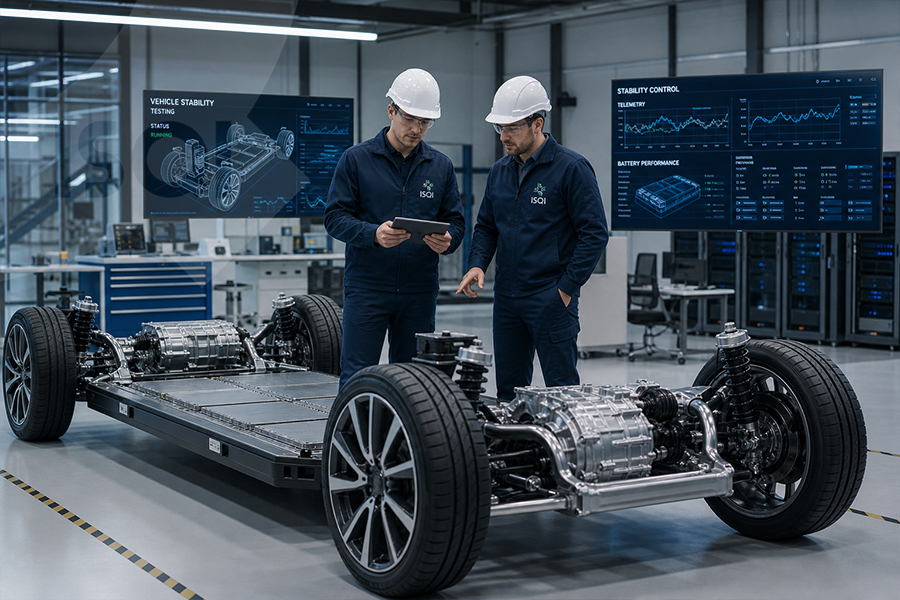
Electronic Stability Control is an intelligent system designed primarily to maintain vehicle stability and prevent loss of control or skidding during critical driving conditions. The system continuously monitors vehicle behavior through a network of sensors.
ESC sensors measure information such as steering angle, wheel speed, lateral acceleration, and the vehicle’s rotational movement around the vertical axis (Yaw Rate) and transmit this data to the Electronic Control Unit (ECU).
If the system detects that the vehicle is losing stability or that its actual trajectory differs from the driver’s intended path, it intervenes within fractions of a second. ESC applies braking force to one or more wheels and, when necessary, reduces engine power to bring the vehicle back to the correct path and prevent deviation, skidding, or rollover.
An important point is that this entire process occurs automatically, and the system operates much faster than a driver’s natural reaction time. Therefore, ESC can prevent accidents in many critical situations.
The Role of ESC in Preventing Accidents
One of the major causes of severe crashes is the loss of vehicle control. This situation may occur when taking a high-speed corner, driving on wet or snowy roads, performing sudden avoidance maneuvers to prevent a collision, or making emergency lane changes.
Under such conditions, even highly skilled drivers may not be able to maintain control of the vehicle. The ESC system is specifically designed for these situations. By rapidly detecting the beginning of a skid and correcting the vehicle trajectory, this technology significantly reduces the likelihood of roadway departure, collision with obstacles, and vehicle rollover.
For this reason, ESC is considered one of the most important active safety systems. Unlike passive safety equipment such as seat belts and airbags, which operate after a crash occurs, ESC is designed to help prevent the accident itself.
Statistical Evidence: How Has ESC Saved Lives?
Extensive studies conducted by IIHS and NHTSA show that Electronic Stability Control is one of the most effective safety technologies in automotive history.
Research results indicate that ESC:
- Reduces the risk of fatal single-vehicle crashes by approximately 50%.
- Reduces the risk of fatal SUV rollovers by approximately 75%.
- Reduces the risk of fatal passenger vehicle rollovers by approximately 72%.
- Significantly decreases the likelihood of many crashes caused by skidding and roadway departure.
These statistics clearly demonstrate that ESC is not merely an assistance technology; rather, it is one of the most important factors in protecting the lives of drivers and vehicle occupants.
Does Removing ESC Make Vehicles Cheaper?
In recent years, alongside rising vehicle prices, some have suggested that removing certain safety features could reduce production costs and make vehicles more affordable for consumers.
However, IIHS evaluations indicate that such an approach is not an appropriate solution and could impose much greater costs on society.
Today, many affordable vehicles priced below $30,000 offer ESC and other safety technologies as standard equipment. This demonstrates that advanced safety technologies do not necessarily make vehicles significantly more expensive.
Furthermore, a considerable portion of vehicle price increases is related to features such as large displays, advanced audio systems, luxury comfort features, more powerful engines, and complex designs—not essential safety technologies such as ESC.
The Real Cost of Removing Safety Technologies
Although eliminating ESC may slightly reduce the production cost of each vehicle, the actual cost of such a decision would be significantly higher.
Traffic crashes result not only in vehicle damage but also in medical expenses, disability costs, insurance losses, reduced economic productivity, and most importantly, the loss of human lives.
Economic studies conducted by NHTSA show that the benefits gained from implementing vehicle safety standards are several times greater than the costs of applying them. In other words, investment in technologies such as ESC is not only justified from a human perspective but also from an economic standpoint.
ESC: The Foundation of Many Modern Safety Technologies
Today, almost all advanced driver assistance systems (ADAS) rely on ESC information and capabilities for proper operation.
Technologies such as:
- Automatic Emergency Braking (AEB)
- Lane Keeping Assist
- Lane Departure Warning
- Traction Control System (TCS)
- Hill Descent Control
either use vehicle stability information or operate in coordination with the ESC system.
Therefore, removing ESC does not simply mean eliminating a single independent system; it can also negatively affect the performance of a wide range of modern safety technologies.
Conclusion
Electronic Stability Control (ESC) is one of the most important innovations in the automotive industry in the field of active safety. By rapidly detecting critical driving conditions and applying intelligent interventions, this technology prevents skidding, roadway departure, and vehicle rollover while playing a significant role in reducing fatal crashes.
Research conducted by IIHS and NHTSA clearly demonstrates that ESC has saved thousands of lives over the years and remains one of the most effective vehicle safety technologies available.
In contrast, removing this system under the justification of reducing vehicle prices would represent a short-term decision with long-term consequences, because the true cost would not be paid in factories, but on roads and through human lives.
Therefore, if the goal of the automotive industry is to produce vehicles that are safe, affordable, and reliable, maintaining life-saving technologies such as ESC must remain one of the primary priorities of manufacturers and policymakers.
Electronic Stability Control is no longer a luxury option; it is one of the fundamental pillars of modern vehicle safety.
References
- https://www.iihs.org/news/detail/sacrificing-safety-is-not-the-way-to-make-cars-affordable
- https://www.iihs.org/news/detail/life-saving-benefits-of-esc-continue-to-accrue