

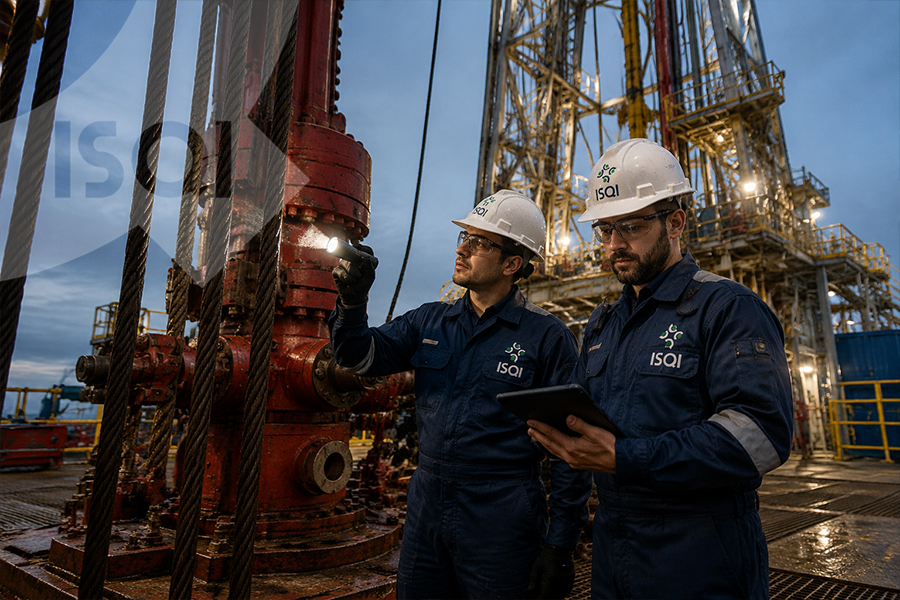
A drilling rig is one of the most complex and critical pieces of equipment in the oil and gas industry, used to access underground oil and gas reservoirs. These rigs operate under extremely harsh environmental conditions, high mechanical stresses, and continuous operations. For this reason, Drilling Rig Inspection is an essential process that plays a key role in maintaining safety, preventing accidents, and improving efficiency.
Drilling rig inspection is not a simple check. Rather, it is a set of detailed technical, mechanical, and safety assessments carried out periodically and in a planned manner to ensure that all parts of the rig are in standard and acceptable conditions.
Importance of Drilling Rig Inspection
In a drilling rig, hundreds of components and systems work in coordination, from hoisting and rotary systems to mud pumps and safety equipment. Any small defect in one of these components can lead to serious consequences, ranging from operational shutdowns to dangerous incidents such as explosions or injuries to personnel.
Therefore, drilling rig inspection serves several key objectives. The most important is protecting human life. The working environment on a drilling rig is inherently high-risk, and even minor equipment failures can endanger workers. In addition, preventing sudden equipment failures is crucial, as emergency repairs are usually very costly and time-consuming.
On the other hand, regular inspections extend equipment lifespan and reduce maintenance costs. Moreover, many international standards and industrial safety regulations require periodic inspections.
General Process of Drilling Rig Inspection
Drilling rig inspection is typically carried out in stages, with each stage focusing on different parts of the rig. This process can range from simple daily checks to advanced specialized testing.
Initially, daily inspections are performed, usually by operators or shift technicians. In this stage, the overall condition of the rig is checked for leaks, abnormal noises, performance of main systems, and the general condition of equipment. The goal is to quickly identify obvious issues and prevent them from escalating.
In later stages, periodic inspections are conducted, which are more detailed and technical. During these inspections, components such as the hoisting system, steel cables, brakes, pumps, and rotating equipment are thoroughly examined. Even the smallest signs of wear or damage are recorded.
Inspection of Main Rig Components
In a complete inspection, all major parts of the drilling rig are evaluated. One of the most important sections is the rig’s steel structure. It must be inspected for cracks, corrosion, deformation, or weakened connections, as the structure bears the main load of the equipment.
Another critical component is the hoisting system, which includes winches, steel wire ropes, and hooks. The cables must be carefully checked for wear, fraying, or diameter reduction, as any damage can be extremely dangerous.
The rotary system, responsible for rotating the drill bit, must also be inspected for vibration, smooth operation, and internal component health. Improper performance in this system can reduce drilling accuracy or damage equipment.
Additionally, the mud system is highly important. It is responsible for cooling the drill bit and transporting drilling cuttings. Pumps, pipes, and tanks must be checked for pressure, leaks, and proper performance.
Finally, safety systems such as the Blowout Preventer (BOP) play a critical role in preventing well blowouts and must be tested and inspected with the highest level of precision.
Inspection Methods and Tools
Drilling rig inspection is not limited to visual observation; specialized methods are also used. One of the most important methods is Non-Destructive Testing (NDT), which evaluates internal conditions of components without causing any damage.
For example, ultrasonic testing uses sound waves to detect internal cracks. Magnetic particle testing identifies surface defects in metals, while dye penetrant testing reveals very fine surface cracks.
These methods help identify problems that are not visible to the naked eye in a timely manner.
Conclusion
Drilling rig inspection is a vital and unavoidable process in the oil and gas industry. It not only enhances safety and prevents accidents but also improves equipment performance and reduces operational costs.
In fact, without a precise and systematic inspection program, maintaining safe drilling operations would be nearly impossible. Therefore, oil companies place strong emphasis on implementing inspection standards and employing skilled professionals in this field.
Author: Zahra Shirband – International Relations Expert ISQI
Sources:
American Petroleum Institute (API) – API 4G, API RP 54
International Organization for Standardization (ISO) – ISO 10418, ISO 19901
Occupational Safety and Health Administration (OSHA) – Oil and Gas Extraction Standards
International Association of Drilling Contractors (IADC) – HSE Guidelines & Rig Inspection Standards
Society of Petroleum Engineers (SPE) Publications