The growing use of Compressed Natural Gas (CNG) as a vehicle fuel has increased the importance of ensuring the safety of fuel storage equipment. CNG cylinders are among the most important components of the fuel systems in natural gas-powered vehicles, as they are responsible for storing natural gas under high pressure. Given their operating conditions, these cylinders must have sufficient strength and resistance and undergo technical inspections and assessments throughout their service life.
CNG cylinders are classified into different types based on their materials, structure, and manufacturing methods. Differences in cylinder design not only affect their weight and mechanical properties but also play an important role in inspection methods and CNG inspection requirements. Understanding the different types of cylinders and their characteristics helps provide a better understanding of the inspection process and the selection of appropriate methods for evaluating their safety.
How Are CNG Cylinders Classified?
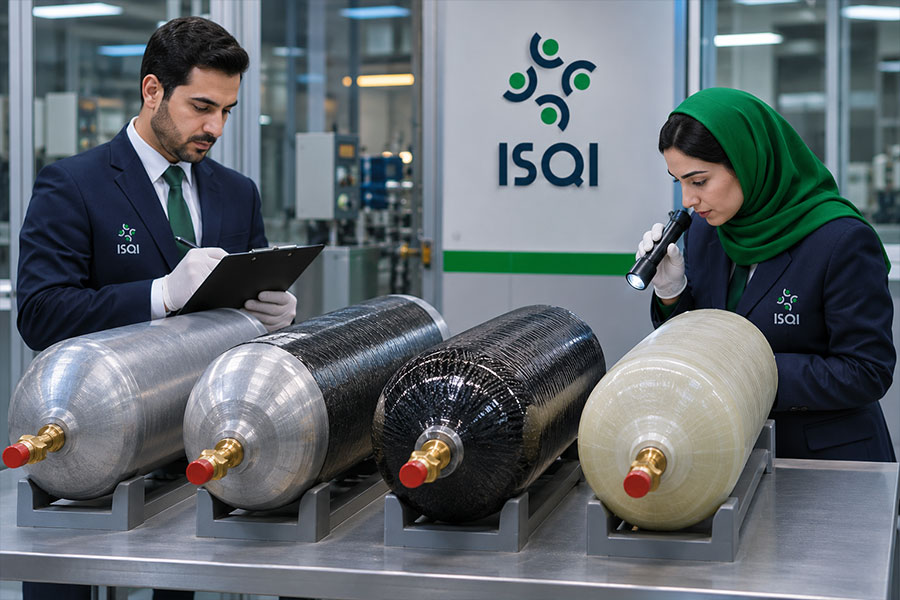
Compressed Natural Gas cylinders are classified into four main types based on their body structure and the materials used in their manufacturing. This classification depends on the extent to which metal and composite materials are used in the cylinder’s construction.
- Type 1 Cylinders: All-Metal Cylinders
Type 1 cylinders are made entirely of metal, with the entire cylinder body responsible for withstanding the internal gas pressure. These cylinders are generally manufactured from steel or aluminum alloys and are among the most common types of CNG cylinders due to their relatively simple structure.
Their main characteristics include good mechanical strength and an all-metal construction. However, they are generally heavier than some composite cylinders.
During CNG inspection of this type of cylinder, the condition of the metal body is particularly important. Factors such as corrosion, rust, cracks, dents, deep scratches, and abnormal deformation must be examined. The condition of threads, valves, and connection points is also among the important aspects of their assessment.
- Type 2 Cylinders: Metal Cylinders with Hoop-Wrapped Composite Reinforcement
Type 2 cylinders have a metallic liner, with part of their surface reinforced by composite fibers, usually in the circumferential direction. In this structure, the metal liner and composite layer jointly contribute to withstanding internal pressure.
The use of composite materials in these cylinders reduces their weight compared to all-metal cylinders.
During CNG inspection of these cylinders, in addition to examining the metallic liner, the condition of the composite sections is also important. Damage such as delamination, cracking, abrasion, and impact marks must be evaluated according to technical criteria and the manufacturer’s instructions.
- Type 3 Cylinders: Fully Wrapped Metal Cylinders
Type 3 cylinders consist of a metallic liner whose entire external surface is reinforced with composite materials. This structure allows a significant portion of the internal pressure load to be carried by the composite layer.
These cylinders are generally lighter than all-metal cylinders and benefit from a combination of the properties of metal and composite materials.
During the CNG inspection process, particular attention must be paid to the integrity of the composite layer. Damage caused by impacts, abrasion, heat, delamination, or deterioration of the reinforcing layers can affect cylinder performance. The condition of the internal metallic liner and connection areas must also be assessed in accordance with technical requirements.
- Type 4 Cylinders: Non-Metallic Liner with Composite Wrapping
Type 4 cylinders consist of a non-metallic liner, usually made of polymer, with an external layer reinforced by composite fibers. In this type of cylinder, the inner liner serves as a gas barrier, while the composite structure plays the primary role in withstanding pressure.
One of the main advantages of these cylinders is their lower weight, which can help reduce the overall weight of a vehicle’s fuel system.
During CNG inspection of this group, particular attention must be paid to the condition of the composite layer, connections, end sections, and signs of damage caused by impacts or heat exposure. Since the structure of these cylinders differs from that of all-metal types, inspection methods and acceptance criteria must be selected according to the cylinder design and the manufacturer’s instructions.
Differences Between CNG Cylinder Types in Terms of Inspection
Although all CNG cylinders are designed to store natural gas under high pressure, differences in their structure and materials mean that their inspection methods are not identical.
For all-metal cylinders, inspection primarily focuses on the condition of the metal body, including corrosion, cracks, dents, and deformation. In contrast, for composite cylinders, greater attention is given to the condition of reinforcing layers, impact marks, abrasion, delamination, and heat-related damage.
Therefore, during the CNG inspection process, the cylinder type and specifications must first be identified so that the inspection can be carried out in accordance with the relevant standards and procedures applicable to that specific type.
The main items considered during the inspection of different CNG cylinder types include:
- Checking the identification plate, serial number, and cylinder identification information.
- Assessing the external condition of the cylinder and identifying potential damage.
- Examining corrosion, cracks, dents, and impact marks on metal cylinders.
- Inspecting the condition of composite layers in reinforced cylinders.
- Checking valves, connections, and auxiliary equipment.
- Assessing installation conditions, clamps, and mounting brackets.
- Determining whether additional tests are required in accordance with the relevant standard.
The Role of Standards in CNG Cylinder Inspection
CNG cylinder inspections must be carried out in accordance with recognized standards applicable to each cylinder type. These standards specify the requirements for cylinder design, manufacturing, testing, inspection, and periodic requalification.
Relevant standards in this field include ISO 11439, which addresses high-pressure cylinders for the on-board storage of natural gas as a fuel for automotive vehicles, and ISO 19078, which covers the inspection of CNG cylinder installations and the requalification of cylinders.
Compliance with these standards helps ensure that inspections are conducted according to defined and verifiable criteria. Furthermore, selecting appropriate inspection and testing methods based on the cylinder’s structure plays an important role in identifying potential damage and evaluating its safety.
Conclusion
CNG cylinders are classified into four main types based on their structure and construction materials: all-metal cylinders, metal cylinders with hoop-wrapped composite reinforcement, fully wrapped metal cylinders, and cylinders with a non-metallic liner and composite wrapping. Each type has its own mechanical characteristics and specific technical requirements.
Understanding the structural differences between these cylinders is essential when selecting appropriate inspection methods. In fact, CNG inspection can provide reliable and effective results only when it is performed according to the cylinder type, relevant standards, and applicable technical procedures. A thorough examination of the cylinder body, composite layers, connections, and auxiliary equipment, together with the required tests, helps assess cylinder safety and determine its suitability for continued service.
Author: Zahra Shirband – International Relations Expert ISQI