
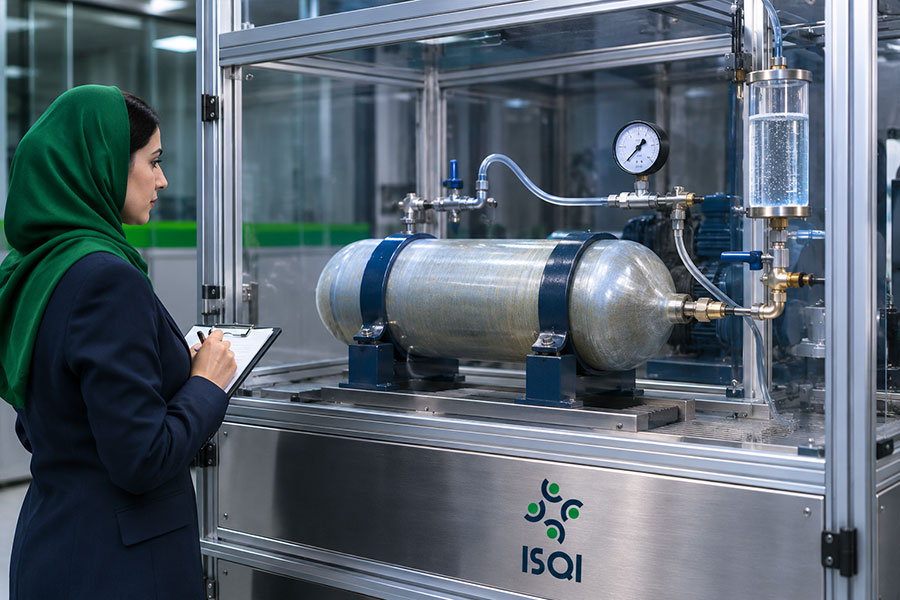
Compressed Natural Gas (CNG) cylinders are pressure vessels used to store natural gas in vehicles powered by CNG. Throughout their service life, these cylinders are exposed to internal pressure, temperature variations, vehicle vibrations, and environmental conditions. Therefore, assessing their integrity and ensuring their ability to withstand pressure are essential requirements for maintaining the safety of natural gas-powered vehicles.
One of the technical methods used to evaluate pressure vessels is the Hydrostatic Test. This test is performed using a liquid, usually water, and makes it possible to examine the cylinder’s behavior under a specified pressure. During this process, changes in the cylinder’s volume and the extent to which it returns to its original condition are evaluated to determine whether it complies with the relevant technical criteria and standards.
What Is Hydrostatic Testing?
Hydrostatic testing is a method used to evaluate the strength and behavior of pressure equipment under internal pressure. In this method, the cylinder is prepared and undergoes preliminary inspections before being filled with a suitable liquid. The pressure is then gradually increased to the level specified in the testing procedure.
The primary purpose of this test is to examine the cylinder’s behavior under specified pressure conditions and identify unacceptable deformation or signs of structural weakness. Since this method uses a liquid instead of gas, the energy stored in the compressed fluid is significantly lower than that involved in gas pressure testing. As a result, hydrostatic testing offers greater safety when performed under controlled conditions.
Why Is Hydrostatic Testing of CNG Cylinders Important?
CNG cylinders are designed to store gas at high pressure. Any structural weakness or change in their mechanical properties may compromise the safety of the vehicle’s fuel system.
Hydrostatic testing is important for several reasons:
- Evaluating the Cylinder’s Pressure Resistance
This test makes it possible to examine the cylinder’s behavior under a specified pressure and determine whether it can withstand the required testing conditions.
- Identifying Unacceptable Deformation
When pressure is applied, the cylinder’s volume may increase. Measuring the extent of this volume change and examining the permanent deformation remaining after pressure release help assess the cylinder’s structural integrity.
- Helping Identify Structural Weaknesses
Abnormal cylinder behavior during testing, including volume changes beyond permissible limits or signs of leakage, may indicate defects and the need for further investigation.
- Supporting Decisions on Continued Service
Test results, together with visual inspections and other technical assessments, provide a basis for evaluating the cylinder’s condition and determining whether it is suitable for continued use.
Stages of Hydrostatic Testing of CNG Cylinders
Hydrostatic testing must be performed in accordance with the relevant standard, the cylinder’s technical specifications, and the testing facility’s operating procedures. The general stages of this process include:
Stage 1: Preliminary Inspection and Cylinder Preparation
Before testing begins, the cylinder’s identification information, such as its serial number, manufacturer’s name, manufacturing date, and working pressure, is checked. Its external condition is also examined for corrosion, cracks, dents, impact marks, and other potential damage.
If any defect is identified that makes testing unsafe or impermissible, the necessary actions are taken in accordance with the applicable procedures.
Stage 2: Gas Removal and Preparation for Testing
The gas must be safely discharged from the cylinder in accordance with safety procedures before testing. At this stage, the required equipment and connections are also inspected to ensure that the cylinder can be properly connected to the testing apparatus.
Stage 3: Filling the Cylinder with Test Liquid
At this stage, the cylinder is filled with a suitable test liquid, usually water. As much trapped air as possible must be removed from inside the cylinder, since the presence of air can affect measurement accuracy and process safety.
Stage 4: Applying Test Pressure
After preparation, the liquid pressure is gradually increased until it reaches the value specified in the relevant standard or testing procedure. Pressure must be applied using appropriate measuring and control equipment.
The cylinder is maintained at the specified pressure for a defined period to allow its behavior under the test conditions to be evaluated.
Stage 5: Measuring Volume Changes and Evaluating Results
One of the most important parts of hydrostatic testing is measuring changes in the cylinder’s volume under pressure and examining the amount of permanent volume change after the pressure is released.
At this stage, the measurement results are compared with the permissible limits specified in the relevant standard. Any signs of leakage, unacceptable deformation, or abnormal behavior are also examined.
Stage 6: Final Evaluation and Recording of Results
After the test is completed, the results are recorded and compared with the applicable acceptance and rejection criteria. Based on this evaluation, the cylinder’s status is determined. If all technical requirements are met, the test result is declared acceptable.
Difference Between Hydrostatic Testing and Visual Inspection
Visual inspection and hydrostatic testing are two different but complementary methods for evaluating CNG cylinders.
During visual inspection, the cylinder’s external condition and visible signs of damage, such as corrosion, cracks, scratches, and dents, are examined. This method helps identify visible defects but cannot independently evaluate the cylinder’s behavior under pressure.
In contrast, hydrostatic testing involves applying liquid pressure to assess the cylinder’s volumetric behavior and resistance under specified test conditions. Therefore, using both methods in accordance with technical requirements provides specialists with more comprehensive information about the cylinder’s condition.
What Factors Affect Hydrostatic Test Results?
The accuracy and reliability of test results depend on several factors, including:
– Calibration and accuracy of pressure and volume measuring equipment.
– Proper implementation of cylinder preparation procedures.
– Adequate removal of trapped air from the cylinder.
– Control of temperature and environmental conditions during testing.
– Compliance with the specified test pressure and holding time.
– Proper implementation of technical procedures appropriate to the cylinder type.
Paying attention to these factors helps ensure more accurate test results and enables a reliable assessment of the cylinder’s condition.
Conclusion
Hydrostatic testing is one of the important methods used to evaluate pressure vessels and examine the behavior of CNG cylinders under specified pressure conditions. During this test, the cylinder is filled with a suitable liquid, and after the specified pressure is applied, its volume changes and overall condition are evaluated.
Proper execution of this test, together with visual inspection and other technical assessments, helps identify potential defects and determine whether cylinders are suitable for continued service. Compliance with relevant standards, the use of calibrated equipment, and testing by qualified inspection bodies are essential factors in ensuring reliable results and improving CNG cylinder safety.
Author: Zahra Shirband – International Relations Expert ISQI