
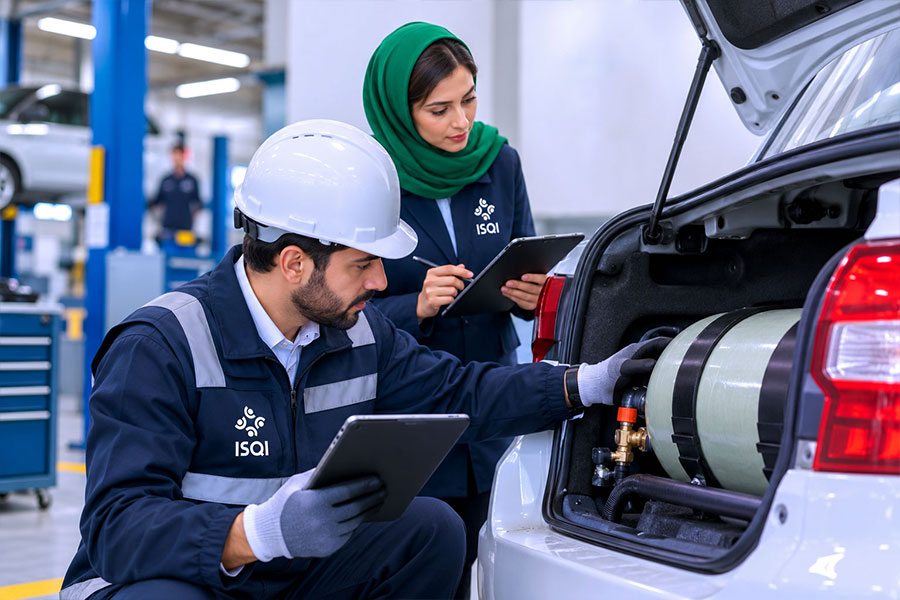
The use of Compressed Natural Gas (CNG) as a vehicle fuel has expanded in recent years due to its advantages, including lower fuel costs and reduced emissions compared to some conventional fuels. However, storing natural gas in vehicles requires specialized equipment that must ensure safety and reliable performance under high-pressure conditions.
The CNG cylinder is one of the most important components of the fuel system in natural gas-powered vehicles. These cylinders are designed and manufactured to store natural gas at high pressure. Therefore, the condition of the cylinder body, connections, valves, and auxiliary equipment is of great importance. Regular inspection of CNG cylinders helps identify potential damage and prevents the continued use of non-compliant or damaged cylinders.
What Is a CNG Cylinder and What Is Its Function?
A CNG cylinder is a pressure vessel designed to store compressed natural gas to supply the fuel required by a vehicle. Depending on their design and the materials used in their construction, these cylinders are classified into different types.
Type 1 cylinders are made entirely of metal. Other types are manufactured using a combination of metal and composite materials or fully composite structures. Differences in cylinder design and material composition mean that inspection methods and acceptance criteria must be determined according to the technical specifications and manufacturer’s instructions.
Since these cylinders are exposed to high pressure, temperature variations, vehicle vibrations, and various environmental conditions, periodic inspection is essential to ensure the safety of the system.
Why Is CNG Cylinder Inspection Important?
One of the main reasons for conducting inspections is to identify damage that may occur as a result of prolonged use or environmental factors. Some of these defects may not be easily detectable in their early stages. If left unaddressed, they may compromise cylinder safety.
The main objectives of CNG cylinder inspection include:
- Identifying Corrosion and Surface Damage
Exposure to moisture, corrosive substances, impacts, or contact with other vehicle components can cause corrosion, scratches, dents, and other forms of surface damage. Inspecting these conditions helps assess the cylinder’s external condition.
- Inspecting Connections and Auxiliary Equipment
The safety of a CNG system does not depend solely on the condition of the cylinder body. Valves, connections, clamps, mounting brackets, and safety devices must also be inspected to ensure proper installation and satisfactory operation.
- Detecting Potential Gas Leaks
Gas leakage is a critical issue that must be considered when inspecting a vehicle’s fuel system. Checking connections and using appropriate leak detection equipment can help identify potential problems.
- Preventing the Use of Damaged Cylinders
Cylinders that have been damaged by accidents, fires, abnormal heat exposure, or impacts must be inspected by qualified personnel and authorized inspection bodies before being returned to service.
Key Aspects of CNG Cylinder Inspection
CNG cylinder inspections must be carried out in accordance with relevant standards, the cylinder’s technical specifications, and the manufacturer’s instructions. In this process, examining the cylinder body alone is not sufficient; all associated equipment must also be taken into consideration.
The main inspection items include:
- Examining the external condition of the cylinder and identifying corrosion, cracks, dents, or unacceptable scratches.
- Checking the condition of mounting brackets, clamps, and supporting equipment.
- Inspecting valves and connections.
- Checking for signs of potential gas leakage.
- Verifying the cylinder identification plate, serial number, and identification information.
- Checking the manufacturing date, permitted service life, and records of previous tests.
- Assessing the condition of safety equipment and pressure relief devices.
The type and scope of inspections are determined based on the cylinder type and applicable standard requirements.
Periodic Inspection and Its Role in Improving Safety
CNG cylinders should not be inspected only after a problem has been detected. Periodic inspections make it possible to assess the cylinder’s condition over time and identify potential damage before it develops into a serious safety hazard.
In Iran, regulations governing visual inspections and testing of CNG cylinders specify inspection intervals for different vehicle categories. For example, the regulations established for private and government light-duty vehicles provide for visual inspections every three years and hydrostatic testing every six years. Inspection intervals for public-service and heavy-duty vehicles differ, and the latest regulations and applicable implementation requirements should be followed.
Furthermore, in the event of an accident, fire, severe impact, or detection of unusual signs, the cylinder must be inspected without waiting for the next scheduled periodic inspection.
The Role of Inspection Bodies in Ensuring Cylinder Safety
Specialized inspections require technical expertise, appropriate equipment, and familiarity with relevant standards. Qualified inspection bodies and laboratories assess the condition of cylinders and fuel system components, providing the necessary information to evaluate their compliance with safety requirements.
By conducting visual inspections, verifying technical specifications, and supervising required tests, these bodies play an important role in identifying defects and preventing the use of unsuitable cylinders.
Conclusion
Due to their role in storing gas under high pressure, CNG cylinders are considered critical components of the fuel systems in natural gas-powered vehicles. Any damage to the cylinder body, connections, or auxiliary equipment can affect the safe operation of the entire system.
Regular inspections and the performance of required tests in accordance with recognized standards are essential measures for identifying potential problems and improving the safety of CNG-powered vehicles. Paying attention to these requirements not only helps protect the lives of drivers and passengers but also contributes to maintaining the quality and reliability of CNG equipment.
Author: Zahra Shirband – International Relations Expert ISQI