

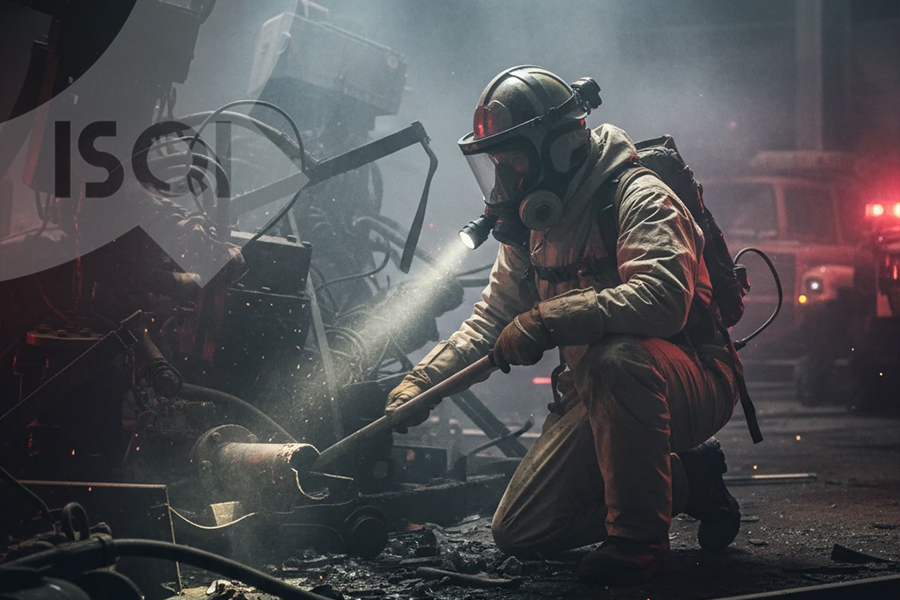
Technical inspection during a crisis is one of the most important tools for managing emergency situations. In crises such as industrial accidents, earthquakes, fires, hazardous material leaks, or organizational emergencies, inspectors play a key role in assessing the situation, identifying hazards, and supporting rapid decision‑making. However, due to time pressure, high stress, and the complexity of the situation, errors may occur in the inspection process that can have serious consequences for people’s safety and crisis management. Below are some common mistakes in crisis-time inspections.
One of the most common mistakes is making hasty decisions without gathering sufficient information. In crisis situations, there is usually pressure to act quickly; however, if an inspector makes judgments without carefully examining environmental conditions, equipment status, or witness information, the assessment may be inaccurate. Such an error can lead to inappropriate solutions and even worsen the crisis.
Another important mistake is ignoring safety priorities. In some emergency situations, excessive focus on assessing damage or identifying the cause of the incident may lead to insufficient attention to the safety of people at the scene. In crisis management principles, however, protecting lives and preventing secondary hazards must always be the top priority.
Lack of coordination with operational and crisis management teams is also considered a common error. Crisis inspections are usually part of a larger incident management system that includes emergency responders, fire services, police, and organizational managers. If an inspector acts without coordinating with these teams, incorrect information may be communicated or rescue operations may be disrupted.
Another significant mistake is incomplete or inaccurate documentation. During a crisis, accurately recording observations, event timelines, and actions taken is extremely important. Sometimes, due to haste or workload pressure, reports are written incompletely or important details are omitted. This can create problems later when analyzing the incident and preventing similar events in the future.
Ignoring signs of secondary hazards is another serious mistake. In many crises, the main hazard may be only part of the problem, while other risks such as explosions, structural collapse, toxic releases, or re‑ignition of fire may exist. If the inspector focuses only on the initial incident and fails to assess these potential threats, people at the scene may remain exposed to danger.
Another mistake is failure to use appropriate safety and protective equipment. In emergency conditions, some inspectors may enter the incident area without personal protective equipment such as safety helmets, respiratory masks, or protective clothing due to urgency or lack of equipment. This not only threatens the inspector’s health but may also reduce their ability to continue the inspection.
Cognitive bias in evaluating the incident is also a common issue. Sometimes inspectors form an early assumption about the cause of the incident based on previous experiences and then interpret information in a way that confirms that assumption. This type of cognitive error can prevent the discovery of the real cause of the incident.
Finally, lack of effective communication and information sharing is another critical mistake in crisis Technical inspection. Information obtained from inspections must be quickly and accurately communicated to crisis managers and operational teams. If this communication is not handled properly, managerial decisions may be made based on incomplete or incorrect information.
In general, reducing these mistakes requires specialized training, crisis simulation exercises, the use of standardized Technical inspection, checklists, and stronger coordination among different teams. Accurate and scientific inspections during a crisis can play a crucial role in controlling emergency situations, reducing damage, and preventing similar incidents in the future.
Author: Zahra Shirband – International Relations Expert ISQI
Sources:
- Haddow, G., Bullock, J., & Coppola, D. (2020). Introduction to Emergency Management. Butterworth-Heinemann.
- FEMA. (2017). National Incident Management System (NIMS). Federal Emergency Management Agency.
- International Labour Organization (ILO). (2015). Guidelines on Occupational Safety and Health Management Systems.
- NFPA. (2022). NFPA 1600: Standard on Continuity, Emergency, and Crisis Management.
- Alexander, D. (2015). Principles of Emergency Planning and Management. Oxford University Press.