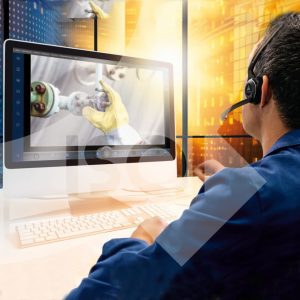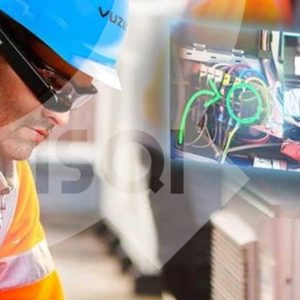

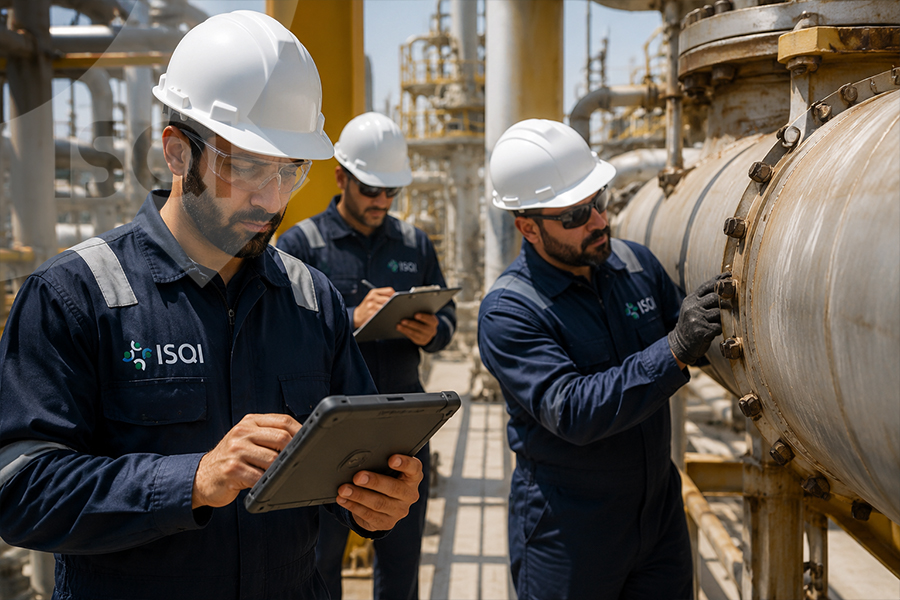
Due to the high‑risk nature of the oil and gas industry, the technical inspection of equipment is one of the most critical activities for maintaining safety, reducing production downtime, and preventing industrial accidents. Equipment used in this industry—including pipelines, pressure vessels, heat exchangers, offshore platforms, and turbines—is exposed to harsh operating conditions such as high pressure, fluctuating temperatures, corrosive environments, vibration, and mechanical impacts. As a result, damage, cracking, corrosion, wear, and deformation are common occurrences and require accurate and reliable inspection methods, especially when equipment becomes damaged.
In recent decades, technological advancements have brought fundamental changes to technical inspection methods, enabling early defect detection, reduced shutdown time, improved accuracy, and lower operational costs. This text first examines the importance of inspecting damaged equipment in the oil and gas industry and then explains the role of modern technologies in this field.
Importance of Inspecting Damaged Equipment in the Oil and Gas Industry
Equipment in this industry typically operates continuously under complex stresses. Damage in a small section can trigger a chain of problems and may even lead to explosions, large-scale leaks, production shutdowns, or environmental disasters. Some of the key reasons for the importance of inspection in this industry include:
– Prevention of catastrophic failure: Many equipment failures begin with small defects. Microcracks caused by fatigue, under-deposit corrosion, and phenomena such as hydrogen embrittlement can lead to sudden failure if they are not detected in time.
– Reduction of maintenance and repair costs: Early detection of defects allows for less expensive repairs and prevents the need for complete equipment replacement.
– Compliance with safety standards and regulations: Standards such as API, ASME, and ISO require periodic technical inspection of equipment.
– Ensuring production continuity: Failure of critical equipment in refineries or pipelines can result in losses of millions of dollars.
– Environmental protection: Leakage of hazardous materials such as sour gas or crude oil can cause irreversible environmental damage.
Role of Modern Technologies in the Inspection of Damaged Equipment
Technological progress has enabled traditional inspection methods—such as visual inspection or destructive testing—to be replaced by more intelligent and precise approaches. Some of the most important technologies include the following:
- Drones in the Inspection of Hazardous and Elevated Areas
The use of drones has created a major transformation in the inspection of damaged equipment, particularly in elevated, remote, hot, or hazardous areas. Their applications include:
– Inspection of flares and stacks without the need for scaffolding
– Monitoring long pipelines across deserts or hard‑to‑reach areas
– Infrared imaging for detecting thermal leaks
The main advantage of drones is the reduction of risk to human inspectors and faster inspection processes, while their accuracy has improved through the use of HD, thermal, and LiDAR cameras.
- Crawling Robots and Intelligent Robots
Pipeline inspection robots (PIG and Smart PIG) are among the most advanced tools for monitoring pipeline integrity. Using technologies such as Magnetic Flux Leakage (MFL) and ultrasonic testing, these robots can:
– Measure pipe wall thickness
– Detect corrosion, delamination, or cracks
– Transmit data either in real time or as stored inspection data
In environments where human access is difficult, crawling robots equipped with cameras, gas sensors, and laser systems are also used to inspect storage tanks and internal equipment.
- Artificial Intelligence and Machine Learning in Data Analysis
With the increasing volume of inspection data—including images, ultrasonic signals, and corrosion monitoring data—manual analysis has become impractical. Artificial intelligence plays an important role in areas such as:
– Analyzing drone images to detect cracks, corrosion, or discoloration
– Predicting the remaining life of equipment (Remaining Life Assessment)
– Vibration analysis to detect failures in bearings and pumps
– Identifying abnormal patterns in condition monitoring data
Deep learning models can significantly improve detection accuracy and reduce human error.
- Advanced Non‑Destructive Testing (NDT) Technologies
Non‑destructive testing plays a crucial role in evaluating damaged equipment. Recent developments include:
– Phased Array Ultrasonic Testing (PAUT): Enables two‑ and three‑dimensional imaging of cracks
– TOFD (Time of Flight Diffraction): Detects very small and deep cracks with high precision
– Active and Passive Thermography: Identifies defective areas based on temperature differences
– Digital Radiography (DR): Reduces radiation exposure while improving image quality
These technologies increase technical inspection speed and reduce the need for operational shutdowns.
- Sensors and Structural Health Monitoring (SHM)
The use of sensors in structures and equipment creates an early warning system. These sensors include:
– Accelerometers for vibration monitoring
– Corrosion sensors (such as corrosion coupons and ER probes)
– Pressure and temperature sensors
– Fiber optic sensors for detecting cracks and deformation
By analyzing the collected data, engineers can predict deterioration trends and prevent potential failures.
- Digital Twin Technology
Digital twin technology is one of the most significant modern innovations in the oil and gas industry. In this approach, an accurate digital model of equipment is created that:
– Reflects the real-time condition of the equipment
– Simulates the effects of operating conditions
– Predicts when and where damage or corrosion may occur
This tool helps engineers make data‑driven decisions and optimize predictive maintenance programs.
Conclusion
The technical inspection of damaged equipment in the oil and gas industry plays a crucial role in preventing financial losses, protecting human lives, and minimizing environmental damage. Modern technologies such as drones, robotics, artificial intelligence, advanced NDT techniques, structural health monitoring systems, and digital twin technology have significantly transformed this field. These technologies not only increase inspection accuracy and speed but also enable predictive maintenance and cost optimization, ultimately improving the overall performance and reliability of the oil and gas industry.
Author: Zahra Shirband – International Relations Expert ISQI
Sources:
– API (American Petroleum Institute). Standards for Inspection and Integrity Management.
– ASME Boiler and Pressure Vessel Code (BPVC).
– DNV‑RP‑F116: Integrity Management of Subsea Pipeline Systems.
– NACE International Standards: Corrosion Control in Oil and Gas Industries.
– ASNT. Non‑Destructive Testing Handbook, 3rd Edition.
– SPE Papers on Robotics, AI, and Digital Twin in Oil and Gas Inspection.
– Oil and Gas Asset Integrity Management (book on inspection and asset integrity).
– IEEE Sensors Journal – articles related to structural health monitoring.