
Over the past few decades, the automotive industry has undergone a remarkable transformation in vehicle safety. While manufacturers once focused primarily on minimizing injuries after a collision, the modern approach emphasizes preventing accidents before they occur. This shift has been made possible through the development of active safety technologies such as the Anti-lock Braking System (ABS), Traction Control System (TCS), and, most importantly, Electronic Stability Control (ESC).
Among all active safety technologies, ESC is considered one of the most significant innovations in automotive engineering. Many safety experts regard it as the most important vehicle safety advancement since the invention of the seat belt. By maintaining vehicle stability during critical driving situations, ESC significantly reduces the risk of skidding, roadway departure, and rollover accidents. Consequently, it has become a fundamental safety requirement in modern vehicle manufacturing worldwide.
The Role of ESC in Enhancing Vehicle Safety
Electronic Stability Control continuously monitors a vehicle’s dynamic behavior through an integrated network of sensors. The system analyzes data such as wheel speed, steering angle, lateral acceleration, and yaw rate, comparing the vehicle’s actual movement with the driver’s intended direction.
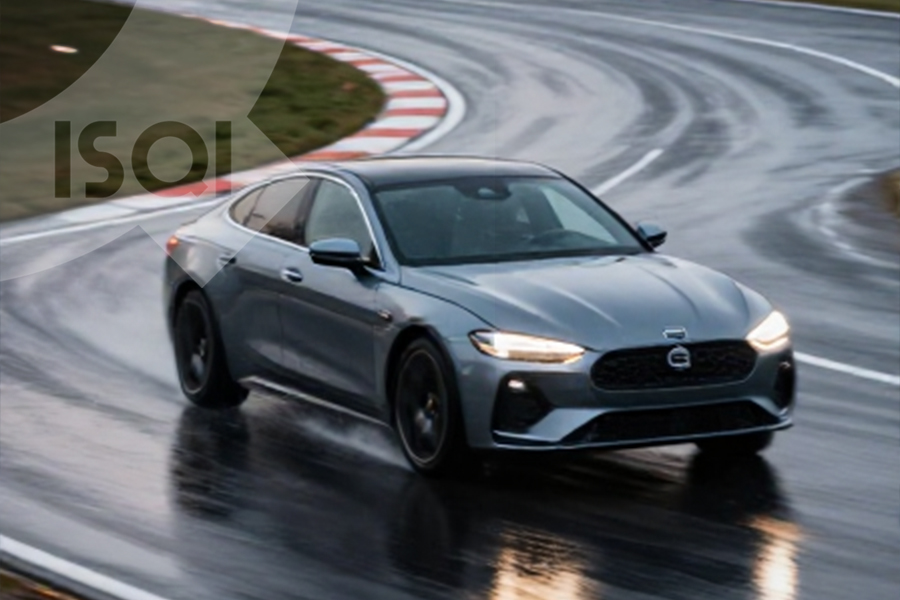
If the vehicle becomes unstable due to excessive speed, slippery road conditions, sudden steering maneuvers, or emergency evasive actions, ESC intervenes within milliseconds. The system selectively applies braking force to one or more individual wheels and, when necessary, reduces engine power to restore vehicle stability and guide the vehicle back onto its intended path.
This rapid response enables drivers to maintain control of the vehicle and helps prevent many potentially serious accidents.
Reducing Traffic Accidents and Road Fatalities
One of the primary reasons for the widespread adoption of ESC is its proven effectiveness in reducing traffic accidents.
Studies conducted by transportation safety organizations in Europe and the United States have demonstrated that vehicles equipped with ESC are significantly less likely to experience roadway departures, rollover crashes, or skidding-related accidents than vehicles without the system.
The benefits are particularly pronounced in Sport Utility Vehicles (SUVs), pickup trucks, and other vehicles with a higher center of gravity, which are inherently more susceptible to rollover during aggressive maneuvers.
For this reason, many road safety experts believe that the widespread implementation of ESC has played a major role in reducing traffic-related fatalities worldwide.
ESC as a Mandatory Global Safety Standard
The outstanding safety performance of ESC has led many countries to mandate its installation in new vehicles.
In the United States, the National Highway Traffic Safety Administration (NHTSA) required Electronic Stability Control to be standard equipment on all new passenger vehicles beginning in 2012.
Similarly, under the European Union General Safety Regulation, ESC has become a mandatory safety feature for newly manufactured vehicles.
Countries including Canada, Australia, Japan, South Korea, and several Gulf Cooperation Council (GCC) member states have also implemented similar regulations requiring ESC in new vehicles.
These regulations clearly demonstrate that Electronic Stability Control is no longer considered a luxury option but an essential vehicle safety feature.
ESC and Vehicle Safety Ratings
Today, leading vehicle safety assessment organizations consider Electronic Stability Control to be one of the fundamental criteria when evaluating vehicle safety.
Organizations such as Euro NCAP in Europe and NHTSA in the United States assess not only crashworthiness and airbag performance but also the effectiveness of active safety technologies, including ESC.
Vehicles equipped with Electronic Stability Control generally achieve higher safety ratings, while those lacking the system are less likely to receive top safety scores.
Consequently, automotive manufacturers have made the continuous development and refinement of ESC technology a strategic priority in order to remain competitive in global markets.
The Relationship Between ESC and Advanced Driver Assistance Systems (ADAS)
As automotive technology continues to evolve, ESC has become one of the core components of Advanced Driver Assistance Systems (ADAS).
Numerous modern driver assistance technologies rely heavily on the data and control capabilities provided by ESC, including:
- Automatic Emergency Braking (AEB)
- Lane Departure Warning (LDW)
- Lane Keeping Assist (LKA)
- Adaptive Cruise Control (ACC)
- Hill Descent Control (HDC)
In essence, Electronic Stability Control serves as the foundation for many intelligent driving technologies. Without ESC, the precise operation of numerous ADAS features would not be possible.
The Future of Electronic Stability Control
As the automotive industry moves toward electric vehicles, autonomous driving, and artificial intelligence, the role of ESC continues to expand.
Next-generation ESC systems will integrate more sophisticated sensors, high-resolution cameras, radar, LiDAR, and AI-based algorithms to analyze road conditions and vehicle behavior with unprecedented accuracy. In the future, ESC will not only maintain vehicle stability but will also become an integral part of intelligent vehicle control systems, contributing to real-time driving decisions. This evolution will be particularly important for semi-autonomous and fully autonomous vehicles.
Why ESC Matters to Consumers
For vehicle buyers, the presence of Electronic Stability Control has become one of the most important criteria when selecting a new vehicle. Although drivers may rarely notice the system during everyday driving, ESC can make the critical difference between a serious accident and a safe recovery in emergency situations. For this reason, automotive safety experts consistently recommend that consumers consider the availability of active safety technologies such as ESC alongside comfort and convenience features when purchasing a vehicle.
Conclusion
Electronic Stability Control (ESC) represents one of the greatest achievements in the field of automotive active safety.
By preventing skidding, loss of directional control, and vehicle rollovers, ESC plays a crucial role in reducing road accidents and protecting vehicle occupants.
The mandatory adoption of ESC in many countries, its importance in international vehicle safety assessments, and its central role in enabling modern technologies such as ADAS and autonomous driving systems clearly demonstrate that ESC has become one of the cornerstones of modern automotive engineering.
As vehicle technology continues to evolve, the future of the automotive industry will remain closely linked to further advancements in Electronic Stability Control and increasingly intelligent vehicle stability management systems. Without doubt, ESC will continue to be one of the most effective technologies for improving road safety worldwide.
Author: Zahra Shirband – International Relations Expert ISQI
Sources
- National Highway Traffic Safety Administration (NHTSA). Electronic Stability Control (ESC).
- European Commission. General Safety Regulation (EU) 2019/2144.
- Euro NCAP. Safety Assist Assessment Protocol.
- Robert Bosch GmbH. Automotive Handbook, 10th Edition.
- Rajamani, R. Vehicle Dynamics and Control. Springer.
- Gillespie, T. D. Fundamentals of Vehicle Dynamics. SAE International.
- ISO 26262 – Road Vehicles – Functional Safety.