Compressed Natural Gas (CNG) cylinders are pressure vessels used to store fuel in natural gas-powered vehicles. These cylinders must be designed and manufactured in accordance with technical standards and must also undergo periodic inspections throughout their service life to ensure their integrity and safety.
CNG cylinder inspection and testing involve a series of technical procedures aimed at evaluating the cylinder’s condition, identifying potential damage, and verifying its compliance with applicable standards. This process includes checking identification details, examining the external condition, assessing auxiliary equipment, and, where necessary, conducting additional tests.
Stage 1: Reviewing Documentation and Cylinder Specifications
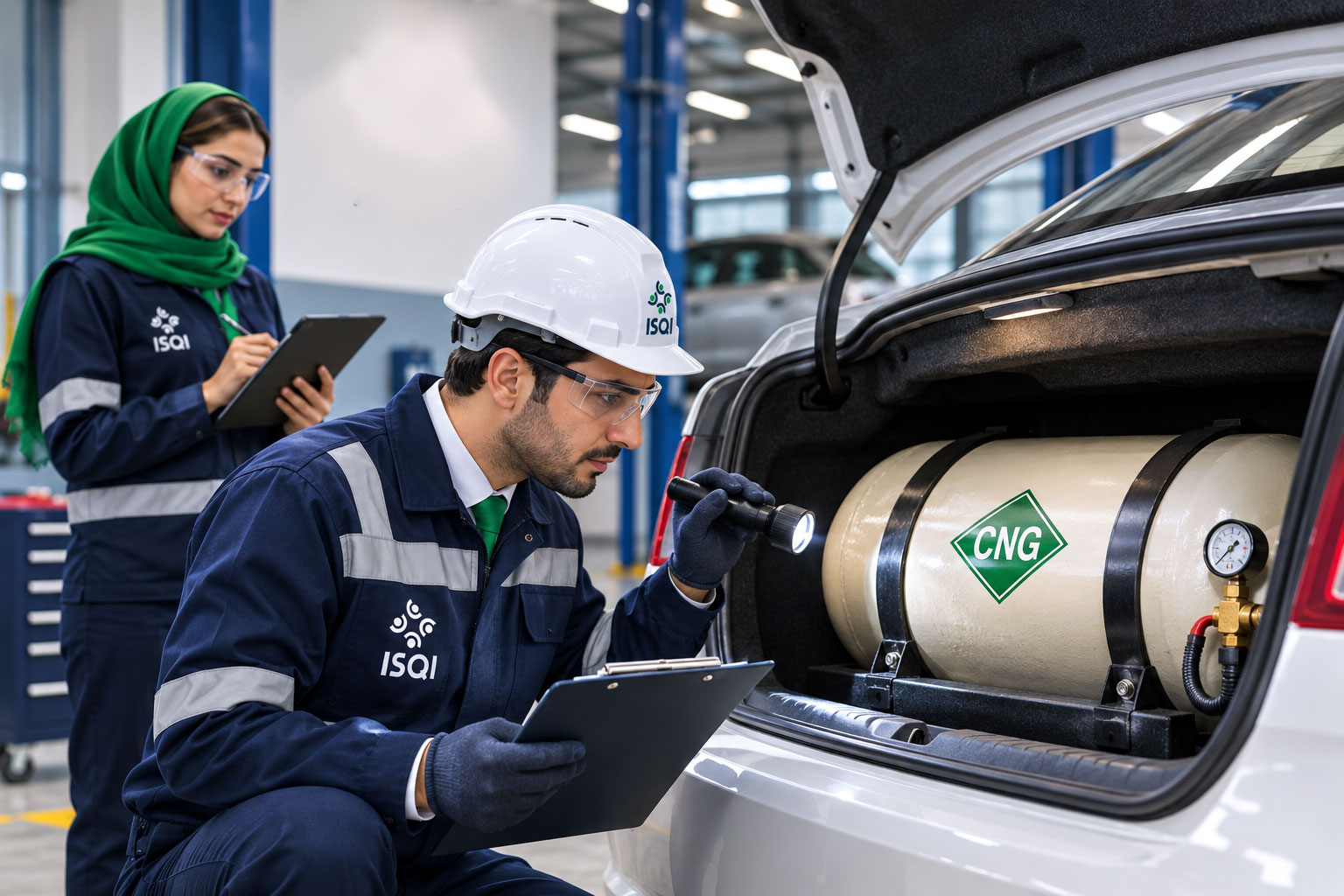
The first step in CNG cylinder inspection is to review its identification information and technical specifications. Each cylinder must carry sufficient information to enable its identification and the assessment of its technical characteristics.
At this stage, details such as the manufacturer’s name, serial number, manufacturing date, working pressure, manufacturing standard, and information regarding the cylinder’s design life are examined.
The presence of a legible and identifiable data plate is particularly important, as the absence of valid identification information makes it difficult to assess the cylinder’s condition and verify its compliance with technical requirements.
Stage 2: Visual Inspection of the Cylinder Body
One of the main stages of the inspection process is examining the external condition of the cylinder. At this stage, the cylinder surface is assessed for signs of potential damage.
Factors such as corrosion, scratches, dents, cracks, impact marks, abrasion, and abnormal deformation are carefully examined. The cylinder’s installation environment and the possibility of contact with other vehicle components are also assessed.
For composite cylinders, particular attention must be paid to signs of damage to the composite layers, in addition to the external surface condition. The assessment criteria for such damage differ from those applied to metal cylinders and must follow the manufacturer’s instructions and relevant standards.
Stage 3: Inspection of Mounting Equipment and Connections
The integrity of the cylinder alone is not sufficient to ensure the safety of the entire system. Mounting equipment and related components must also be inspected.
The following items are assessed at this stage:
– Condition of the cylinder clamps and mounting brackets.
– Strength and proper installation of the cylinder on the vehicle.
– Condition of valves and connections.
– Condition of safety devices and pressure relief devices.
– Inspection of connections and system components for signs of potential gas leakage.
Improper installation or loose mounting equipment can create stress and cause damage to the cylinder while the vehicle is in motion. Therefore, this stage of the inspection is particularly important.
Stage 4: Conducting Technical and Additional Tests
In certain circumstances, visual inspection alone may not be sufficient to fully assess the cylinder’s condition, making additional tests necessary.
One of the well-known tests in this field is the hydrostatic test. In this method, the cylinder’s behavior under liquid pressure and the extent of its volume expansion are evaluated in accordance with the specified testing procedure and standard acceptance criteria. The purpose of this test is to assess the cylinder’s ability to withstand specified pressure conditions.
In addition, depending on the cylinder type and applicable technical requirements, other testing methods may be used to assess equipment condition or identify defects.
It is important to note that all tests must be conducted in accordance with the relevant standards and by qualified laboratories or authorized inspection bodies. The selection of testing methods depends on the cylinder type, operating conditions, and the findings of the initial inspection.
Stage 5: Evaluating Results and Determining the Cylinder’s Status
Upon completion of the inspection and required tests, the results are compared with the acceptance and rejection criteria specified in the relevant standards.
At this stage, the cylinder is assessed in terms of damage, technical condition, and suitability for continued service. Depending on the established criteria, the cylinder may be accepted as fit for continued use or, due to identified defects, may require further examination, removal from service, or replacement.
The final decision must be based on technical documentation, test results, and applicable standard requirements.
The Importance of Compliance with Standards in CNG Inspection
CNG cylinder inspection is a specialized activity, and its proper execution depends on compliance with relevant standards.
ISO 19078 addresses the requirements for the inspection of cylinder installations and the periodic inspection of high-pressure cylinders used in natural gas-powered vehicles. In addition, Iranian national standards, including those related to cylinders and their testing procedures, are used to establish technical and operational requirements.
Compliance with these requirements ensures that the inspection process is conducted according to defined and verifiable criteria, making the results reliable and traceable.
Conclusion
CNG cylinder inspection and testing are multi-stage processes that begin with reviewing cylinder documentation and specifications, followed by visual examination, inspection of auxiliary equipment, conducting the required tests, and evaluating the results.
The proper implementation of these stages by qualified inspection bodies makes it possible to identify potential damage and assess cylinder safety. Ultimately, systematic inspections and compliance with technical standards play an important role in improving confidence in the performance of fuel systems in natural gas-powered vehicles and reducing potential risks.
Author: Zahra Shirband – International Relations Expert ISQI