
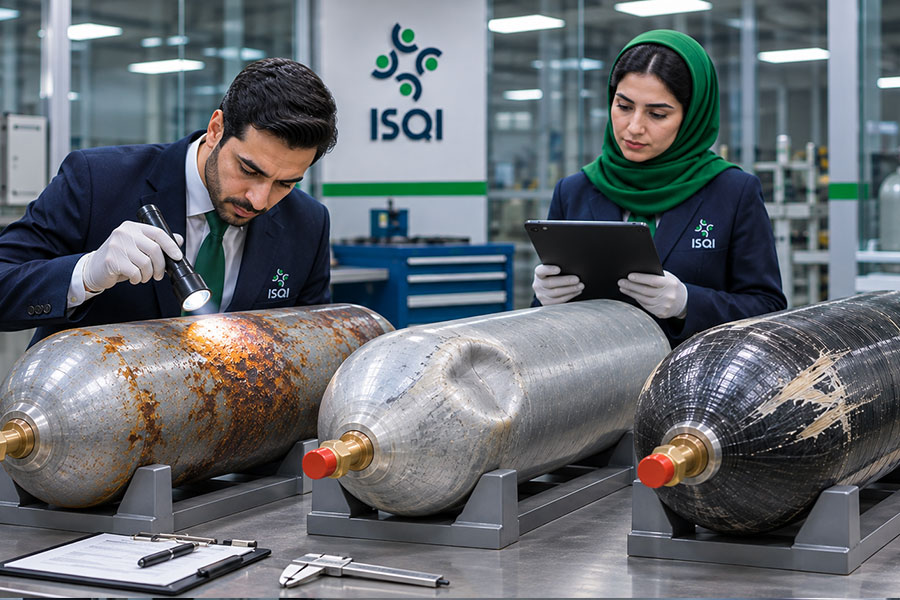
Compressed Natural Gas (CNG) cylinders are pressure vessels whose safety plays an important role in the reliable operation of natural gas-powered vehicles. Periodic inspection of these cylinders is essential to ensure their integrity and suitability for use. However, certain circumstances may make a re-assessment necessary even before the next scheduled inspection is due.
In fact, CNG inspection should not be limited to a fixed schedule. Accidents, repairs involving the fuel system, or unusual changes in the cylinder’s condition may indicate the need for an additional inspection. Under such circumstances, continued use of the cylinder without a professional assessment may put the safety of the vehicle and its occupants at risk.
This article examines the most important situations in which a Causes of CNG Cylinder Damage should be assessed by qualified personnel or authorized inspection facilities before being returned to service.
1. Following an Accident or Impact to the Vehicle
One of the most important situations that may require re-inspection of a Causes of CNG Cylinder Damage is a vehicle accident or impact. Even if the accident appears minor or the cylinder seems intact at first glance, forces acting on the vehicle body may have been transferred to the cylinder through its mounting brackets and clamps.
In such circumstances, a visual examination of the vehicle alone is not sufficient to confirm the cylinder’s integrity. The cylinder’s mounting location, the condition of its supporting brackets and connections, and the cylinder itself should be assessed for possible signs of impact or displacement.
Therefore, following an accident, particularly when the rear section of the vehicle or the area where the cylinder is installed has been affected, the cylinder and its related equipment should be examined by specialists before the CNG system is used again.
2. Following Exposure to Fire or Intense Heat
Exposure of a vehicle to fire or intense heat may affect the safety of its CNG cylinder, even if the flames have not come into direct contact with it.
CNG cylinders are designed and manufactured to withstand specific operating conditions. Exposure to temperatures outside the permitted range may affect the properties of their construction materials or the performance of their various components. This is particularly important for composite cylinders, as heat can affect the structure of the reinforcing layers and the materials from which they are made.
For this reason, following a fire or exposure to abnormal heat, a decision about whether the cylinder can be reused should not be based solely on its external appearance. A professional assessment in accordance with the manufacturer’s instructions and relevant technical requirements is essential.
3. Following Major Repairs or Modifications to the Fuel System
Any repair or modification involving CNG fuel system components may affect the cylinder’s installation conditions and performance. For example, repairs to mounting brackets, connections, the cylinder valve, or other related components may alter the original installation configuration.
In such cases, it is necessary to ensure that the cylinder remains properly installed and that no abnormal stress, damage, or defects have developed in its connections or associated equipment.
Furthermore, if repairs require the cylinder to be removed and reinstalled, its condition should be checked and compliance with installation requirements should be verified. Properly completing repairs does not, by itself, confirm that the cylinder is safe. A further technical assessment should be carried out whenever necessary.
4. When the Cylinder Is Relocated or Reinstalled
For technical or maintenance reasons, in causes of CNG Cylinder Damage may sometimes be removed from its original mounting position and installed elsewhere. This process, particularly when transportation or handling is not carried out properly, may create conditions that require the cylinder to be re-assessed.
During reinstallation, several factors must be considered, including the suitability of the installation location for the cylinder’s specifications, the condition of the mounting brackets and clamps, the method used to secure the cylinder, and the condition of its connections. Improper installation may subject the cylinder body to inappropriate pressure or stress, increasing the risk of damage during operation.
For this reason, following relocation and reinstallation, it is important to comply with technical instructions and have the installation condition checked by qualified specialists.
5. If Unusual Signs Are Observed in CNG System Operation
Sometimes, even without an accident or repair work, unusual signs may appear during CNG system operation that indicate the need for a technical assessment. Examples include the smell of gas, unusual noises around connections, or suspected gas leakage.
These signs do not necessarily indicate damage to the cylinder itself; they may be related to the valve, connections, pipes, or other system components. Nevertheless, since the cylinder is part of a pressurized assembly, it is important to inspect it along with the other components.
If a gas smell is detected or a leak is suspected, the vehicle should be stopped in a safe location away from ignition sources. The connections should not be tampered with, and leaks must never be checked using an open flame. Inspection and repair should be entrusted to qualified specialists, and the system should not be used again until its safety has been confirmed.
6. As the Cylinder Approaches the End of Its Design Life
Every cause of CNG Cylinder Damage has a specified design life based on its design characteristics and applicable technical requirements. This period can be verified using the cylinder’s identification information and the manufacturer’s documentation. It should not be confused with the intervals between periodic inspections.
As the end of the design life approaches, it is important to review the cylinder’s records and determine its status in accordance with applicable requirements. However, passing a periodic inspection or confirming that the cylinder has no visible damage does not, by itself, extend its design life.
After the design life has expired, the possibility of continued use must be assessed strictly in accordance with applicable regulations and technical requirements, and only where such use is explicitly permitted. Therefore, checking the manufacturing date, the information on the identification plate, and the cylinder’s inspection history is essential.
7. If the Cylinder’s History or Specifications Are Unknown
Another situation that may require further assessment is the lack of sufficient information about the cylinder’s specifications and history. For example, the identification plate may be damaged or illegible, records of previous inspections may be unavailable, or the date and conditions of the cylinder’s installation may be unknown.
The cylinder’s identification information is essential for determining its type, manufacturer, manufacturing date, technical specifications, and applicable assessment requirements. Without this information, it may be difficult to identify the appropriate inspection criteria and determine whether the cylinder is suitable for continued use.
In such cases, the matter should be referred to an authorized facility so that the cylinder can be identified and the necessary actions determined.
Re-Inspection: Beyond Periodic Inspections
Periodic inspections of CNG cylinders are conducted to assess their condition at specified intervals. However, these inspections cannot replace the additional assessments required following accidents or changes in operating conditions.
In other words, a cylinder’s satisfactory condition at the time of an inspection does not guarantee that it will remain in the same condition after an accident, fire, relocation, or major repair. Each of these events may create new circumstances that make re-assessment necessary.
During the CNG inspection process, reviewing the cylinder’s records, assessing its external condition and installation, and carrying out additional tests, when necessary, help experts determine whether the cylinder can remain in service, requires corrective action, or must be taken out of service.
Conclusion
The safety and causes of CNG Cylinder Damage depends not only on carrying out periodic inspections but also on paying attention to circumstances that may affect their condition. Accidents, fires, repairs involving the fuel system, relocation and reinstallation, unusual signs during operation, and approaching the end of the design life are among the situations in which the need for a further cylinder assessment should be considered.
Under such circumstances, decisions about continued use should not be based solely on the cylinder’s appearance or the vehicle’s normal operation. Consulting authorized facilities and carrying out the required inspections and tests are essential steps in ensuring that the cylinder complies with safety requirements and reducing potential risks.
Author: Zahra Shirband – International Relations Expert ISQI